When people decorate a room, they usually begin with the walls, furniture, flooring, curtains, and accessories. The ceiling often gets treated as an afterthought, painted white and forgotten once the rest of the room is finished. Yet the ceiling is one of the largest uninterrupted surfaces in a home, and the right design can completely change how a space feels.
A beautiful ceiling can make a modest room appear more sophisticated, give a large room greater architectural character, create visual height, improve lighting, and introduce a memorable focal point without taking up valuable floor space. That is why modern interior design increasingly treats the ceiling as a genuine design opportunity rather than simply a structural necessity.
Current decorating conversations are also moving toward more individual, layered, and character-rich interiors instead of spaces that feel overly coordinated or generic.
The best part is that an impressive ceiling does not automatically require an enormous renovation budget. A simple painted ceiling in an unexpected shade can create drama, while subtle molding can make an ordinary room feel architectural.
Coffered panels, timber details, recessed lighting, exposed beams, wallpaper, plaster textures, and sculptural fixtures can all produce very different effects. Lighting deserves special attention because it can make even a relatively simple ceiling feel luxurious; ENERGY STAR notes that LED lighting can use up to 90% less energy than incandescent lighting, making efficient lighting an attractive combination of design and practicality. Whether your taste is modern, traditional, minimalist, rustic, glamorous, or somewhere comfortably in between, there is a ceiling idea capable of giving your room that extra layer of personality.
Why the Ceiling Deserves More Attention
A ceiling influences a room in a surprisingly powerful way because it sits above everything else. Think about it like the roof of a stage: the actors, furniture, artwork, and accessories may get the attention, but the structure overhead controls much of the atmosphere. A completely flat white ceiling can make a room feel clean and bright, but it can also disappear visually.
Add beams, recessed lighting, a soft color, geometric panels, or a carefully designed architectural border, and suddenly the same room has depth. This is particularly useful in contemporary homes where furniture may be relatively simple and the ceiling provides an opportunity to introduce visual interest without filling the floor with unnecessary objects. A thoughtfully designed ceiling can also help connect separate parts of a room, especially when its lines echo the shape of furniture, flooring, windows, or architectural features.
The Ceiling as the Fifth Wall
Designers sometimes describe the ceiling as the fifth wall, and the phrase makes perfect sense once you start looking upward. Four vertical walls establish the basic envelope of a room, while the ceiling completes that visual composition. Instead of automatically matching the ceiling to the walls, homeowners can use contrast to create a more intentional atmosphere.
A warm beige ceiling above creamy walls can create softness, while a deep green ceiling can make a dining room feel dramatic and intimate. A pale blue ceiling can suggest openness, whereas natural wood can introduce warmth and texture. The important thing is not simply choosing something different but choosing a finish that supports the room’s purpose and existing materials. In a calm bedroom, subtle texture may be more effective than a complicated geometric pattern, while a formal dining room can handle stronger architectural details.
How Ceiling Design Changes Room Proportions
Ceiling design can also manipulate the way you perceive dimensions. Vertical architectural lines, recessed borders, and carefully positioned lighting can draw the eye upward and make a ceiling appear taller. Conversely, a darker ceiling can visually lower a very tall room, which may make an oversized space feel more intimate and comfortable.
Tray ceilings can create the impression of additional depth because the central portion appears recessed, while coffered ceilings divide a broad surface into smaller architectural sections. In compact rooms, the safest approach is usually to avoid overly heavy structures that consume too much visual space. Slim moldings, light colors, reflective finishes, or perimeter lighting can add sophistication without making the room feel crowded. The trick is to use the ceiling to correct or enhance the room’s natural proportions rather than fighting against them.
Modern Ceiling Design Ideas for a Stylish Home
Modern ceiling design is no longer limited to a large rectangular false ceiling with a few rows of spotlights. Today’s interiors often combine simplicity with texture, warmth, architectural detail, and carefully controlled lighting. One of the strongest directions is toward personalized spaces that feel collected rather than mass-produced.
Recent interior design coverage has highlighted a movement away from overly coordinated interiors and toward more individual combinations of materials, shapes, and finishes. That philosophy works beautifully overhead because the ceiling can become one distinctive element without forcing every other part of the room to compete for attention.
Coffered Ceilings for Architectural Depth
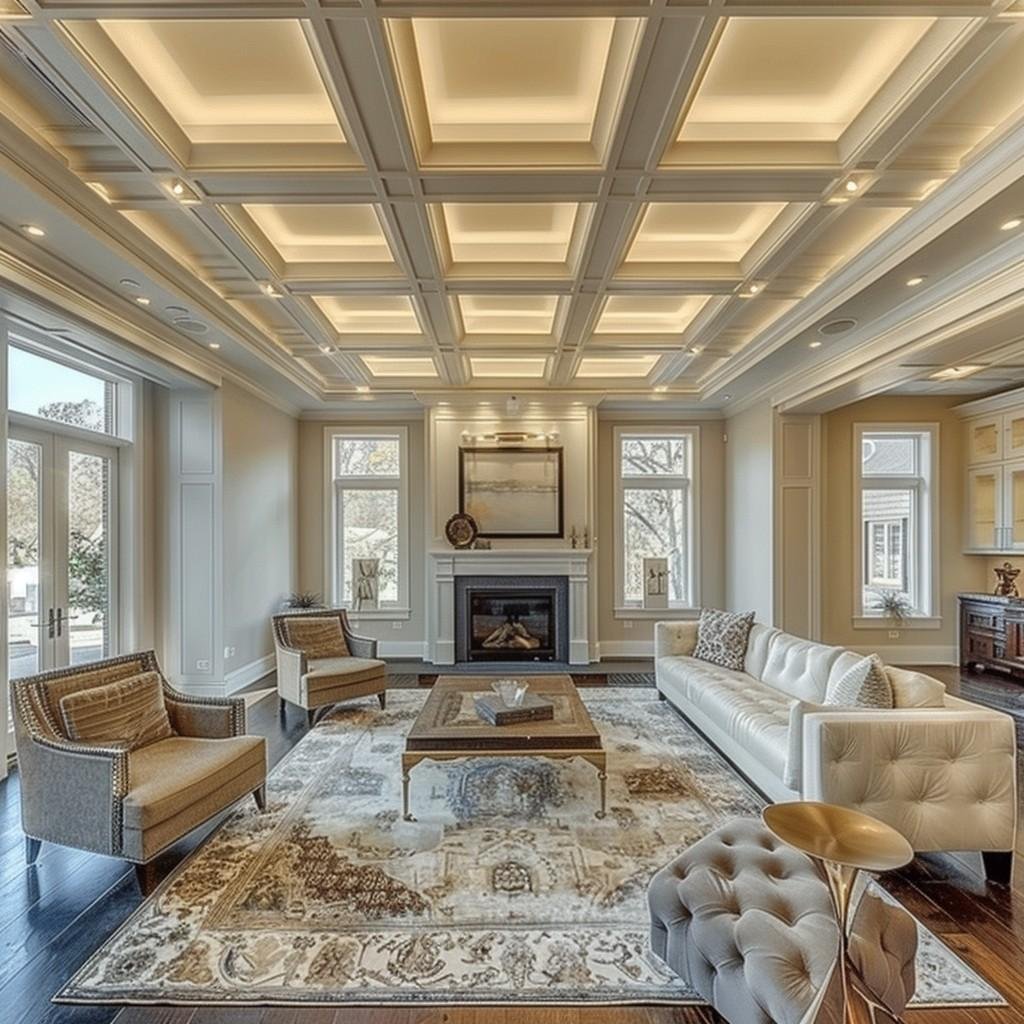
A coffered ceiling uses recessed panels separated by beams or decorative framing. The result can be traditional and elegant, but it can also look surprisingly contemporary when the lines are kept clean and the finish is restrained. A classic white coffered ceiling with subtle trim works beautifully in formal dining rooms and living areas, while a natural wood version can give a modern home a warmer architectural identity. Coffers are especially effective in large rooms because the repeated panels break up an expansive ceiling surface and create rhythm. They can also frame lighting beautifully, allowing recessed fixtures or pendant lights to sit naturally within the design. If you want the room to feel expensive without covering every surface in decoration, architectural depth is often more convincing than simply adding more accessories.
Tray Ceilings for a Refined Layered Look
A tray ceiling features a central section that is raised or recessed relative to the surrounding perimeter. It is one of those designs that can look understated during the day and spectacular at night when combined with concealed lighting.
A narrow LED strip around the recessed area can create a soft floating effect, while a contrasting paint color can make the central panel feel like a deliberate architectural feature. Tray ceilings work particularly well in bedrooms, dining rooms, and living spaces where a large central area can accommodate a chandelier or pendant. The design does not need to be excessively complicated. In fact, a simple rectangular tray with crisp lines often looks more contemporary than a heavily decorated version.
Wooden Ceilings for Warmth and Character
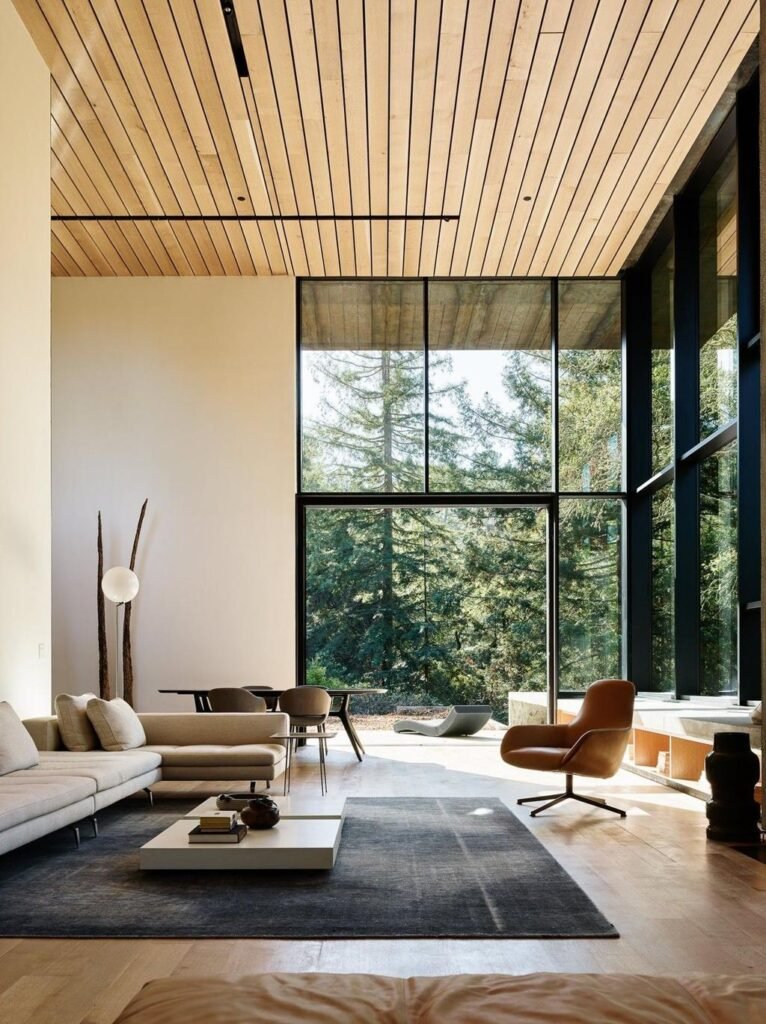
Wood immediately changes the emotional temperature of a room. Even when used sparingly, timber can make a clean modern interior feel warmer, more natural, and more inviting. Wooden ceiling designs can take many forms, including narrow slats, broad panels, exposed beams, acoustic wood systems, or a partial wood insert above a dining or seating zone.
The strongest designs usually balance the wood with simpler surrounding surfaces so the ceiling remains the star. Light oak can create a Scandinavian-inspired atmosphere, walnut can introduce richness, and reclaimed timber can give a rustic or industrial room a sense of history. Wood is particularly effective when the same tone appears elsewhere in the room through furniture, flooring, shelving, or architectural trim, creating visual continuity without making everything match perfectly.
Choosing Wood Tones and Finishes
Choosing a wood finish requires more thought than simply selecting the color you like in a showroom. Natural light, flooring, wall color, furniture, and room size can all change how the timber appears. A dark wood ceiling can be wonderfully dramatic in a high-ceilinged room but may feel heavy in a compact space with limited daylight. Pale wood can keep a low ceiling visually lighter while still providing texture.
Matte and natural finishes generally feel more relaxed, while polished surfaces can produce a more formal appearance. Before committing, look at samples under both daylight and artificial lighting. The ceiling will interact with every other material in the room, so the goal is to create harmony rather than introduce an isolated statement.
Statement Ceiling Designs That Create a Focal Point
A statement ceiling is ideal when you want the room to have one memorable feature. Instead of decorating every wall, shelf, and corner, you can allow the ceiling to carry much of the visual drama.
This approach can actually make a room feel more organized because the eye has a clear destination. A statement ceiling might use color, wallpaper, geometric forms, decorative plaster, wood, metallic accents, or a spectacular light fixture. The key is restraint elsewhere. If the ceiling already has strong pattern and texture, simpler furniture and quieter walls can help the overall design breathe.
Current interiors increasingly favor personality and intentional layering, so a distinctive ceiling can be an excellent way to make a room feel personal rather than copied from a catalog.
Bold Paint and Color-Drenched Ceilings
Painting the ceiling a color other than white is one of the simplest ways to transform a room. You do not necessarily need an intense shade; soft sage, dusty blue, warm taupe, muted terracotta, creamy beige, or charcoal can all produce sophisticated results. A technique called color drenching takes the idea further by allowing related colors to flow across walls, trim, and ceiling, creating a cocoon-like effect. A dark ceiling can be particularly effective in a dining room, library, or cozy bedroom where intimacy is desirable. In a bright living room, a lighter color can add personality without making the space feel enclosed. Before choosing the shade, consider the direction of natural light and the colors already present in upholstery, flooring, and artwork.
Geometric and Sculptural Ceiling Patterns
Geometric ceilings can give a contemporary room an almost architectural-art quality. Linear panels, diagonal forms, hexagonal patterns, circular details, and repeated rectangles can create rhythm above a seating or dining area.
The challenge is knowing when to stop. A complicated pattern combined with bold furniture, patterned flooring, and busy walls can quickly become overwhelming. A better strategy is to let the ceiling provide the geometry while keeping other major surfaces relatively calm. Even a simple grid can look sophisticated when the spacing is proportional to the room. Curved or sculptural forms can soften an otherwise angular interior and work especially well when repeated through rounded furniture or lighting.
Decorative Molding and Ceiling Panels
Decorative molding remains one of the most flexible ways to upgrade an ordinary ceiling. Thin perimeter trim can frame a room, while rectangular panel molding can create an elegant traditional appearance without requiring a completely new ceiling structure. Modern versions often use simplified profiles rather than elaborate ornamentation.
You can paint the molding the same color as the ceiling for subtle texture or use a slight contrast to emphasize the geometry. Decorative panels are also useful when you want architectural interest but cannot significantly reduce ceiling height. They can create the impression of custom craftsmanship at a fraction of the visual complexity of a fully elaborate ceiling.
Ceiling Lighting Ideas That Transform the Atmosphere
A beautiful ceiling and beautiful lighting should be considered together. Lighting determines whether the details you invested in will actually be visible, and it can completely change the mood of a room after sunset.
Recessed lights can provide clean general illumination, concealed LED strips can emphasize architectural edges, pendants can establish a focal point, and chandeliers can add sculptural drama. Energy efficiency is another reason lighting deserves careful planning. ENERGY STAR states that LED products can produce light using up to 90% less energy than incandescent bulbs, while certified LED bulbs can also last substantially longer. Good lighting therefore has the potential to improve both aesthetics and everyday practicality.
Recessed Lighting and LED Cove Lighting
Recessed lighting is popular because it provides illumination without visually dominating the ceiling. When positioned carefully, downlights can highlight seating areas, artwork, kitchen counters, or circulation paths. The mistake is covering the entire ceiling with identical fixtures simply because there are many spaces available.
Lighting should respond to how the room is actually used. Cove lighting provides another option by hiding LED strips inside architectural recesses, producing indirect light that washes across the ceiling or wall. This can create a softer appearance than exposed bulbs and is particularly effective with tray and floating ceiling designs. ENERGY STAR also notes that certified recessed downlight products can offer major efficiency benefits compared with traditional incandescent lighting.
Pendant Lights and Statement Chandeliers
Sometimes the most effective ceiling design is a beautiful fixture suspended from a simple surface. A large pendant or chandelier can act like jewelry for a room, instantly creating a focal point above a dining table, seating arrangement, kitchen island, or bed. Scale matters enormously.
A tiny fixture can disappear in a large room, while an oversized chandelier can make a smaller space feel crowded. Consider the furniture beneath it and the height of the room before choosing the size. Sculptural lighting is especially effective when the rest of the ceiling is relatively quiet because it allows the fixture to become the main character rather than competing with multiple decorative elements.
Layering Ambient, Accent, and Task Lighting
The most successful lighting schemes usually combine several layers rather than relying on one source. Ambient lighting provides general illumination, accent lighting emphasizes architectural or decorative elements, and task lighting supports specific activities such as cooking, reading, or working.
These layers allow a room to change throughout the day. Bright general lighting can make cleaning easier, while dimmed indirect lighting can create a relaxed evening atmosphere. If your ceiling design contains beams, coffers, panels, or recesses, accent lighting can reveal those details after dark. Adding dimming controls makes the system even more adaptable, giving you the ability to treat the same room as a workspace in the afternoon and a cozy retreat at night.
Beautiful Ceiling Designs for Different Rooms
There is no universal ceiling design that works perfectly everywhere. A living room often benefits from a dramatic architectural feature or statement light, while a bedroom usually needs something softer and more relaxing. Kitchens require careful consideration of functional lighting, moisture, ventilation, and cleaning, while dining rooms can tolerate stronger decorative elements. The ceiling should therefore respond to what happens below it.
This room-specific approach prevents the common mistake of copying the exact same false ceiling pattern throughout an entire house. Repetition can create continuity, but every space deserves enough individuality to feel intentional.
Living Room Ceiling Ideas
The living room is usually the strongest candidate for a statement ceiling because it is one of the home’s most visible gathering spaces.
A tray ceiling with concealed lighting can create an elegant contemporary effect, while a coffered design can provide more traditional architectural character. If the room has exposed structural beams, highlighting them rather than hiding them may create a stronger result. A large pendant or chandelier can anchor the seating arrangement and provide a natural visual center. For a simpler renovation, consider painting the ceiling a warm neutral shade and installing carefully positioned recessed lighting. The goal is to make the ceiling feel connected to the furniture arrangement rather than designing it independently.
Bedroom Ceiling Ideas
Bedrooms generally benefit from ceiling designs that encourage calm rather than visual excitement. A soft painted ceiling, subtle tray detail, wooden slats, delicate molding, or concealed warm lighting can create a relaxing atmosphere. A central pendant above the bed can provide symmetry, while perimeter lighting can create a gentle glow without requiring harsh overhead illumination. Darker colors can work beautifully in bedrooms because they make the space feel intimate and cocoon-like, particularly when combined with soft textiles. If you want a luxury hotel-inspired look, focus on clean architectural lines and layered lighting rather than excessive ornamentation. A bedroom ceiling should make you want to slow down, not feel like you have walked into a showroom.
Kitchen and Dining Room Ceilings
Kitchens and dining areas offer opportunities for stronger ceiling design because the spaces naturally have defined functional zones. A wood-lined ceiling above a dining table can visually separate the eating area, while a tray ceiling can distinguish a dining zone within a larger open-plan room. In kitchens, recessed lighting is often useful for general illumination, while pendants above an island can provide both decoration and practical task lighting. Materials should be selected with maintenance in mind because kitchens experience heat, moisture, grease, and frequent cleaning. A beautiful design that becomes difficult to maintain quickly loses its appeal. In dining rooms, decorative molding, bold paint, wallpaper, or a dramatic chandelier can create a more theatrical environment.
Small Room Ceiling Solutions
Small rooms do not need elaborate ceilings to feel special. In fact, simplicity often works better. A light-colored ceiling with a narrow perimeter molding can create definition without reducing visual height, while a subtle LED strip can produce a floating effect. Vertical visual cues and carefully directed light can draw attention upward. If you want color, consider a soft tone rather than an extremely dark shade unless the goal is specifically to create a cozy, enclosed mood. Mirrors and reflective finishes can also help distribute light, although they should be used thoughtfully rather than turning the ceiling into a glossy surface. The guiding principle is simple: every ceiling element should earn its place.
Choosing the Right Ceiling Design for Your Home
The most beautiful ceiling is not necessarily the most complicated one. A successful design balances appearance, room dimensions, construction requirements, maintenance, lighting, and budget. Before choosing a style, measure the ceiling height and identify existing electrical points, ventilation equipment, beams, pipes, air-conditioning components, and other practical constraints.
A design that looks wonderful in a photograph may not translate directly into your room. This is especially important with suspended or false ceilings because excessive layering can reduce available height. Homeowners discussing false ceilings online often point out the trade-off between additional design flexibility and concerns such as reduced ceiling height, repair access, cost, and maintenance.
Materials, Height, Budget, and Maintenance
Gypsum board, plaster, wood, MDF, metal, acoustic panels, paint, wallpaper, and decorative molding each have different strengths. Gypsum is versatile for creating curves, recesses, trays, and integrated lighting, while wood introduces natural warmth.
Paint is one of the most affordable ways to make a major visual difference, and molding can add architectural detail without rebuilding the entire ceiling. Your budget should include not only the visible materials but also installation, electrical work, lighting fixtures, finishing, painting, and future maintenance. If the ceiling contains concealed wiring or plumbing, think about how easily those systems can be accessed later. A stunning ceiling that becomes a nightmare to repair is not a successful design. Good planning is what turns an attractive idea into a practical long-term improvement.
| Ceiling Design | Best For | Visual Effect | Maintenance | Budget Level |
|---|---|---|---|---|
| Painted ceiling | Any room | Simple, spacious, colorful | Low | Low |
| Decorative molding | Bedrooms, dining rooms | Classic and refined | Low | Low–Medium |
| Coffered ceiling | Living and dining rooms | Architectural depth | Medium | Medium–High |
| Tray ceiling | Bedrooms, living rooms | Layered and elegant | Medium | Medium–High |
| Wood ceiling | Living rooms, dining rooms | Warm and natural | Medium | Medium–High |
| Recessed LED ceiling | Modern interiors | Clean and contemporary | Low–Medium | Medium |
| Cove lighting | Bedrooms, lounges | Soft and luxurious | Medium | Medium |
| Statement chandelier | Living/dining areas | Dramatic focal point | Medium | Medium–High |
| Geometric panels | Modern interiors | Artistic and distinctive | Medium | Medium–High |
| Wallpaper ceiling | Bedrooms, powder rooms | Decorative and unexpected | Medium | Low–Medium |
Common Ceiling Design Mistakes to Avoid
One of the biggest mistakes is choosing a design purely because it looks impressive in a photograph. A ceiling should fit the proportions and architecture of your actual home. Another common error is using too many recessed lights, which can make the ceiling look like a grid of holes rather than an elegant architectural surface.
Mixing too many patterns, colors, textures, and lighting effects can also create visual noise. Some homeowners also choose extremely low false ceilings without considering how the reduced height will affect the room. Finally, ignoring maintenance is a mistake that can become expensive later. Before construction begins, ask how bulbs will be replaced, how concealed wiring will be accessed, what happens if a leak develops, and whether the selected material can withstand the conditions of the room.
Conclusion
Beautiful ceiling designs have the power to change a room without changing its footprint. They can add height, warmth, texture, architectural character, drama, or softness while leaving the floor available for the things you actually use every day. From elegant coffered ceilings and layered trays to natural wood, painted surfaces, decorative molding, recessed lighting, and sculptural chandeliers, the possibilities are broad enough to suit almost every interior style. The strongest designs do not simply follow trends; they respond to the room’s proportions, natural light, purpose, materials, and personality.
The current movement toward more individual and character-rich interiors makes the ceiling an especially exciting place to experiment. You do not need to cover every inch with decorative detail to make an impact. Sometimes a warm color, a narrow border, a beautiful pendant, or a carefully positioned LED strip can do more than an elaborate construction. If you are planning a renovation, start by looking at your ceiling as a genuine design surface rather than an empty space above your head. Once you begin thinking of it as the fifth wall, you may discover that the most overlooked part of your room is actually the feature with the greatest potential.
FAQs About Beautiful Ceiling Designs
1. What is the most popular modern ceiling design?
Modern interiors commonly use clean tray ceilings, recessed lighting, concealed LED strips, simple geometric details, wooden accents, and minimalist coffered designs. The best choice depends on the room’s height, architecture, and overall decorating style. A simple ceiling with excellent lighting can often look more sophisticated than a highly complicated design.
2. Which ceiling design makes a room look bigger?
Light-colored ceilings, subtle recessed lighting, slim architectural details, and perimeter illumination can help a room feel more open. Designs that avoid excessive visual weight are usually better for compact spaces. A carefully designed tray or floating ceiling can also create a sense of additional depth.
3. Are false ceilings a good idea for modern homes?
False ceilings can be useful for integrating lighting, concealing wiring, creating architectural layers, and improving the visual appearance of a room. However, they also require careful planning because they can reduce ceiling height and add construction and maintenance considerations. The decision should be based on the specific room rather than assuming every space needs one.
4. What is the best ceiling design for a bedroom?
Bedrooms usually work well with soft tray ceilings, subtle molding, warm wood details, painted ceilings, or concealed indirect lighting. Warm, dimmable lighting can make the room feel more relaxing at night. The design should complement the bed, textiles, wall color, and natural light rather than overpower them.
5. How can I upgrade my ceiling on a small budget?
Painting the ceiling a new color is one of the simplest options. You can also add affordable molding, replace an ordinary light fixture with a statement pendant, install carefully planned LED lighting, or create a small decorative ceiling panel. Even one thoughtful change can make a ceiling feel considerably more intentional without requiring a complete renovation.
For More Info :
Luxury Mudroom Ideas That Keep Every Home Beautiful and Organized