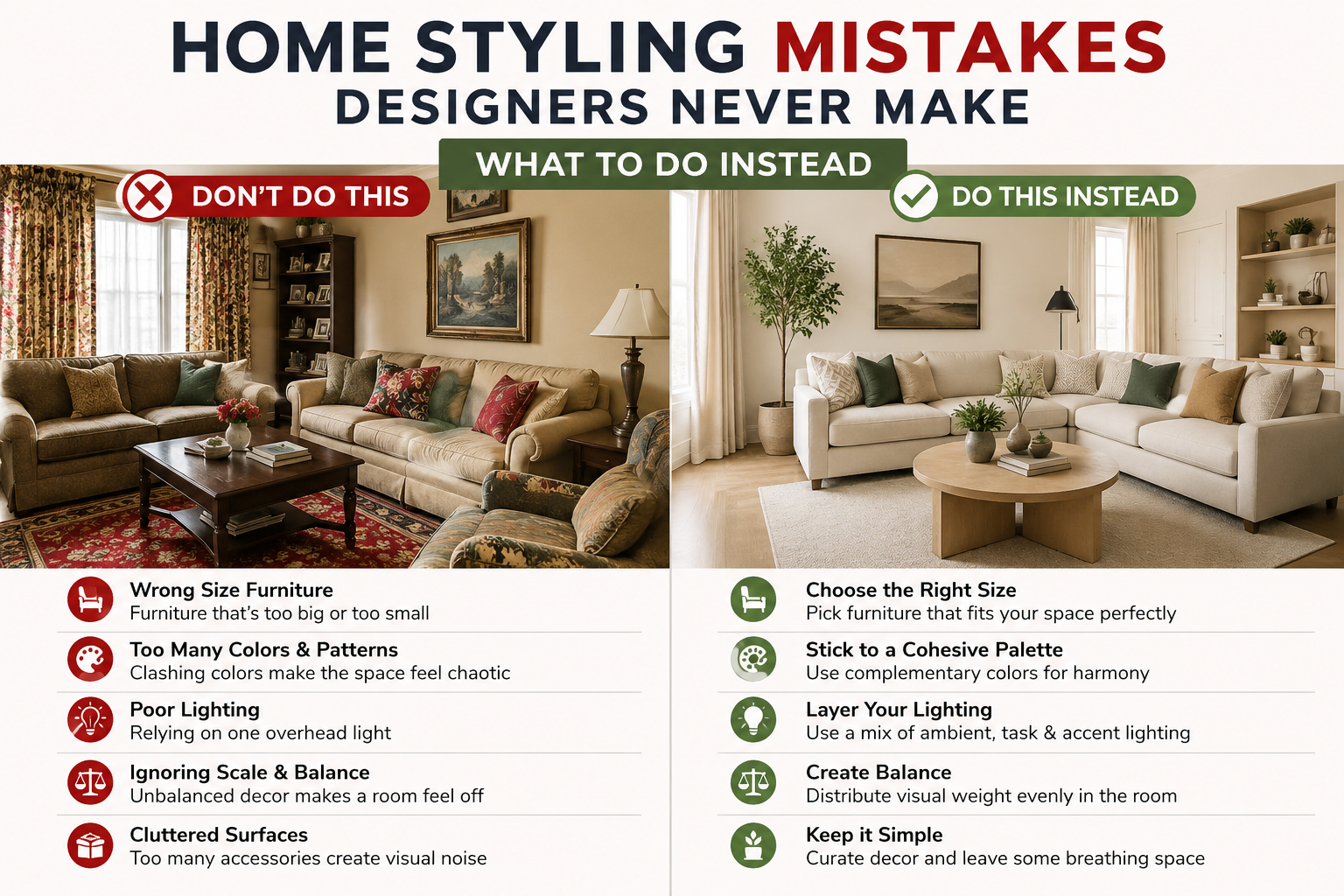
Discover the most common home styling mistakes designers avoid, from wrong furniture sizes to poor lighting. Learn practical ways to style your home beautifully.
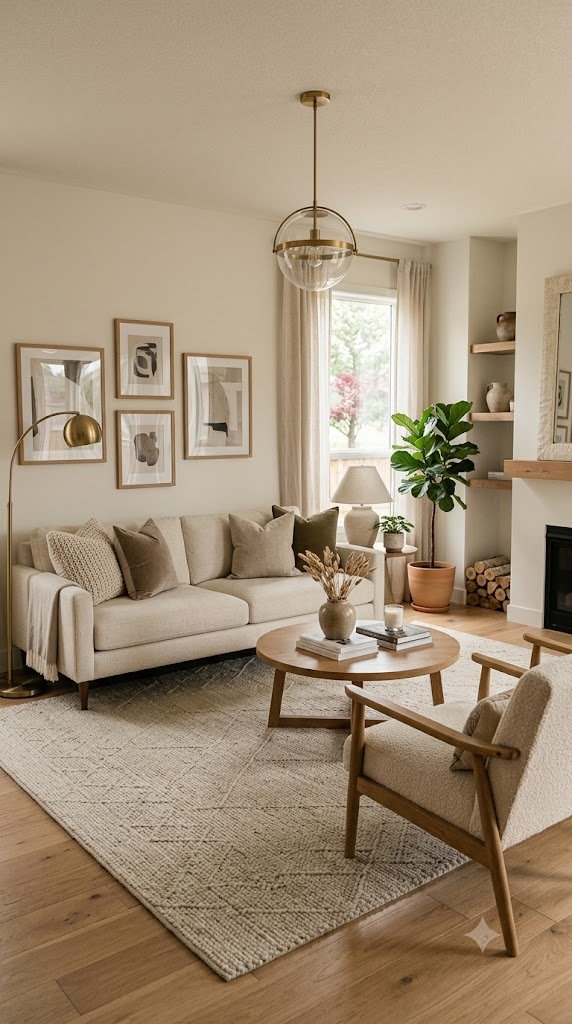
Your home doesn’t need a complete makeover to look better.
Sometimes the problem is one oversized sofa, a tiny rug, harsh lighting, or a collection of decor that’s fighting for attention.
Professional designers spend a lot of time noticing these small details. They know where furniture should sit, how much space a room needs to breathe, and why some beautiful pieces simply don’t work together.
The good news? You can use the same principles at home.
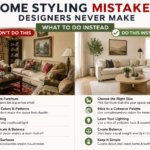
Here are the home styling mistakes designers avoid, plus practical fixes you can use without turning your house upside down.
1. Buying Furniture Before Measuring the Room
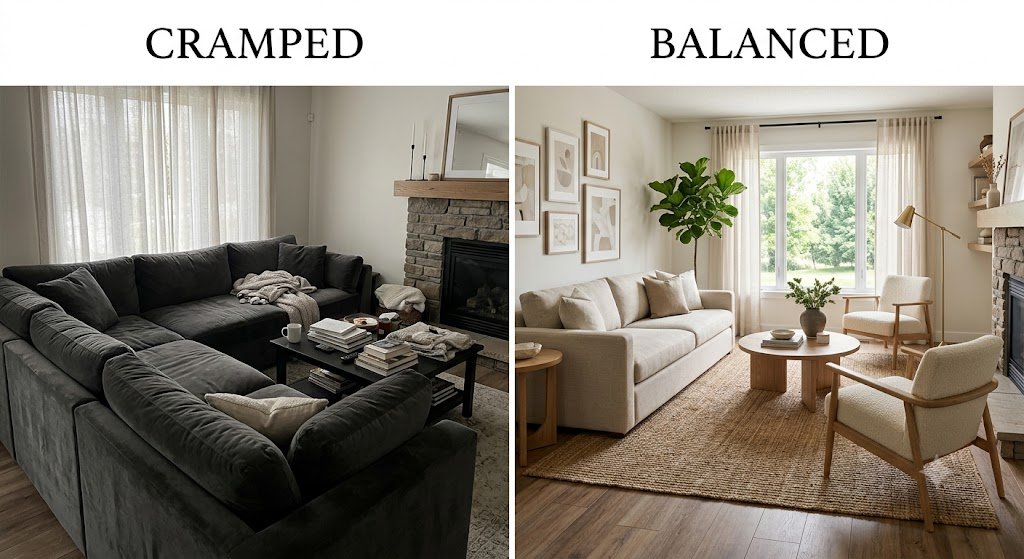
This is one of the easiest home styling mistakes to make.
You see a gorgeous sofa online. The dimensions look reasonable. You order it.
Then it arrives.
Suddenly, your living room feels like the sofa has eaten half the floor.
Designers measure before they buy. They consider the wall, doorways, windows, walking paths, and the furniture already in the room.
What to do instead
Measure the room first.
Write down the width and length of the available space. Measure doorways too, especially if you’re buying large furniture.
You can even mark the furniture footprint on the floor with painter’s tape.
It takes 10 minutes and can save you from an expensive mistake.
For a comfortable living room, leave enough space for people to walk around furniture without squeezing sideways.
The goal is simple: furniture should fit the room, and the room should still feel usable.
For More :
The Cozy Wealth Aesthetic Why Million-Dollar Homes Feel So Relaxing
2. Choosing a Rug That’s Too Small
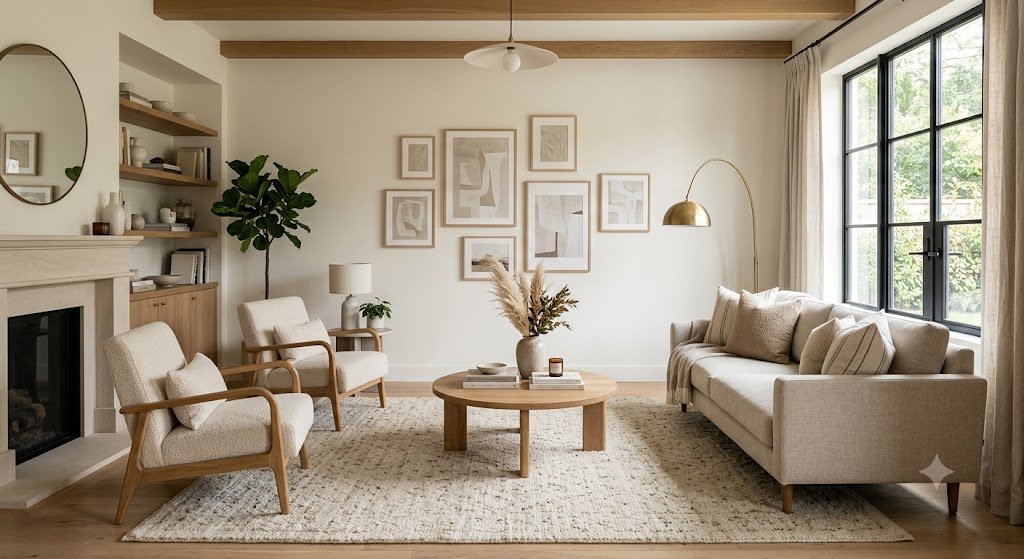
A tiny rug can make an otherwise beautiful room feel disconnected.
This happens constantly in living rooms. The coffee table sits on the rug, while the sofa and chairs sit completely outside it.
The result looks a little like each piece belongs to a different room.
What to do instead
Choose a rug large enough to connect the main furniture.
Ideally, the front legs of your sofa and chairs should sit on the rug. In a larger room, you can place all the furniture on it.
Before buying, measure the seating arrangement rather than choosing the rug size based only on the empty floor.
And if you’re working with a small budget, don’t panic.
A larger affordable rug can sometimes work better than a tiny expensive one.
3. Pushing Every Piece of Furniture Against the Wall
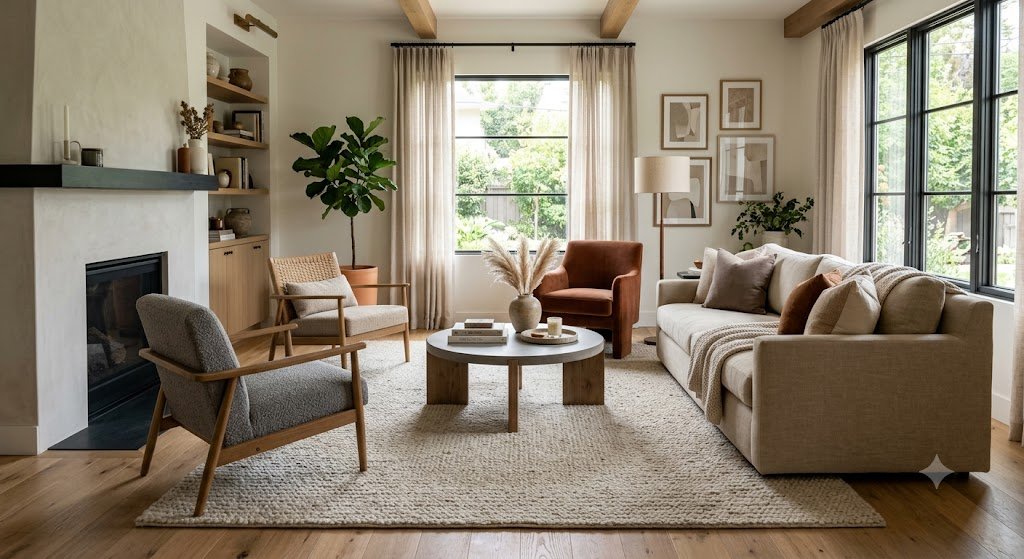
There’s something comforting about pushing furniture against the walls.
You get more open floor space in the middle.
But your room can end up feeling strangely empty, even when it’s full of furniture.
Designers often pull furniture slightly inward to create a conversation area.
What to do instead
Try moving your sofa a few inches away from the wall.
Place chairs across from it. Add a coffee table between the seating pieces.
The furniture should create a relationship with each other.
You don’t need a huge room to do this.
Even a small adjustment can make a living room feel more intentional.
4. Using Only One Lighting Source
A single ceiling light rarely makes a room feel warm.
It may be practical, but overhead lighting can create shadows and make everything look flat.
Designers usually think about lighting at different levels.
For Image converter :
What to do instead
Use several types of lighting.
Try a floor lamp beside the sofa. Add a table lamp to a console or side table. Use wall lights where they make sense.
Then keep the main ceiling fixture for general illumination.
You don’t need expensive designer lamps everywhere.
A few well-placed lights can change the mood of an entire room.
Warm bulbs also tend to make living spaces feel more comfortable in the evening.
5. Hanging Artwork Too High
You’ve probably seen it.
A beautiful painting sitting several inches above the furniture, floating awkwardly on the wall.
Artwork needs a visual connection with the furniture beneath it.
What to do instead
Hang artwork at a comfortable viewing height.
When artwork sits above a sofa, console, or bed, think about the relationship between the two pieces.
The exact height depends on the artwork, ceiling height, furniture, and room, so avoid treating one measurement as a universal rule.
Step back before making the final hole.
And use painter’s tape to test the position first.
Your wall will thank you.
6. Buying Everything From the Same Collection
Matching furniture can feel safe.
A matching sofa, coffee table, side tables, TV unit, and dining set seem easy to coordinate.
But when every piece comes from the same collection, the room can start looking like a showroom.
Designers usually mix finishes, shapes, materials, and textures.
What to do instead
Keep a few elements consistent.
Maybe your wood tones relate to each other. Perhaps your metal finishes repeat.
Then introduce something different.
Pair a modern sofa with a vintage side table. Add a woven basket beside a smooth ceramic lamp.
The room should feel collected over time.
It doesn’t need to look like you bought everything during one shopping trip.
7. Choosing Decor Without Considering Scale
A small vase can disappear on a large console.
A giant lamp can overwhelm a narrow side table.
Scale matters more than many people realize.
What to do instead
Look at the size of the furniture before choosing accessories.
Large furniture usually needs accessories with enough visual weight to hold their own.
On a long console, one tiny object may look lost.
Try grouping a few pieces with different heights instead.
A tall lamp, medium-sized artwork, and smaller decorative object can create a more balanced arrangement.
You don’t need dozens of accessories.
You need the right proportions.
8. Filling Every Empty Surface
Empty space can feel uncomfortable when you’re decorating.
You see an empty shelf and immediately want to put something on it.
Then another thing.
Then another.
Eventually, the shelf becomes a storage area for decorative objects.
What to do instead
Leave some surfaces empty.
Give your eye somewhere to rest.
On a bookshelf, leave breathing room between groups of books and objects.
On a coffee table, choose a small number of pieces rather than covering the entire surface.
And remember that empty space isn’t wasted space.
It helps the things you actually love get noticed.
9. Ignoring the Entryway
The entryway is easy to overlook.
It’s often treated as a place where shoes, bags, keys, and mail simply land.
But it’s the first part of your home people see.
What to do instead
Make the entryway useful and attractive.
Add a narrow console if you have room. Use a tray for keys. Add a mirror or artwork.
If the space is tiny, a wall-mounted shelf and hooks may be enough.
Keep the area practical.
A beautiful entryway that can’t handle everyday life won’t stay beautiful for long.
10. Choosing Paint Colors Without Testing Them
A paint color can look perfect on a small screen.
Then you put it on the wall and wonder what happened.
Lighting changes color dramatically.
The same shade can look different in morning sunlight, afternoon light, and warm evening light.
What to do instead
Test paint before committing.
Paint a sample area on more than one wall if possible.
Look at it throughout the day.
Pay attention to your flooring, furniture, curtains, and natural light.
Don’t choose a color simply because it looks good in someone else’s room.
Your room has its own lighting and materials.
11. Buying Trends Instead of Decorating for Your Home
Trends are fun.
But following every home decor trend can make your space feel disconnected from your actual life.
One month it’s a certain color. The next month it’s another furniture shape.
You don’t need to chase all of them.
What to do instead
Use trends in small doses.
Try a new cushion, vase, lamp, artwork, or throw.
Keep larger purchases based on what you genuinely like and what works in your space.
A sofa can stay for years.
A cushion can change next season.
That difference matters when you’re decorating on a budget.
For more Info:
Organic Modern Kitchens That Feel Straight Out of a California Designer Home
12. Forgetting About Function
A room can look beautiful in a photograph and be annoying to live in.
Maybe the coffee table is too far from the sofa.
Maybe the dining chairs hit the wall when you pull them out.
Maybe there’s nowhere to put your phone beside the bed.
Designers think about how people move through a room.
What to do instead
Walk through the room before finalizing the layout.
Sit on the sofa.
Pull out the dining chair.
Open the cabinet.
Walk from the bedroom to the bathroom.
Check whether everyday actions feel natural.
Your home should work at 7 a.m. on a busy weekday, not only when everything is perfectly arranged.
13. Using Too Many Small Decorative Pieces
Small decor can multiply quickly.
One little candle becomes 3 candles. Then there’s a tiny bowl, a small vase, a miniature sculpture, and several other objects.
Individually, they may be lovely.
Together, they can create visual clutter.
What to do instead
Group objects deliberately.
Use different heights and shapes.
Give each group some empty space around it.
You can also rotate decor instead of displaying everything you own at once.
Store some pieces and bring them back later.
Your home will feel fresher, and your shelves won’t look overloaded.
14. Ignoring Curtains and Window Height
Curtains can completely change how a room feels.
When they’re hung too low or cut too short, the window can look smaller.
What to do instead
Consider mounting the curtain rod higher and wider than the window frame when the room and window allow it.
Let the curtains frame the window rather than covering too much glass.
Choose a length that works with your floor and furniture.
And don’t forget the fabric.
Lightweight curtains can soften a room, while heavier materials can create a richer, more enclosed feeling.
15. Forgetting Texture
A room can have beautiful colors and furniture and still feel flat.
The missing ingredient is often texture.
Think about how many surfaces in your room feel visually similar.
Smooth table. Smooth sofa. Smooth curtains. Smooth walls.
It can start looking a little sterile.
What to do instead
Mix textures.
Add a woven basket.
Use a textured throw.
Try linen curtains, a wool rug, ceramic accessories, or a wooden stool.
Texture gives the room something to look at without requiring a dozen new colors.
For Image converter :
16. Matching Every Color Too Closely
You don’t need your cushions to exactly match your curtains, rug, artwork, and accessories.
Perfect color matching can make a room feel overly planned.
What to do instead
Choose a small color family.
Then vary the shades.
For example, a room might use warm beige, cream, brown, and a muted green.
The colors relate without looking identical.
You can also repeat one accent color in small places.
A green cushion might connect visually with a plant pot or artwork across the room.
That creates a relationship without turning the room into a color-matching exercise.
17. Keeping Furniture That Doesn’t Work
Sometimes we keep furniture simply because we’ve owned it for years.
It may have sentimental value.
Or you spent good money on it.
But if a chair blocks the walkway or a table is too large, the room has to work around it.
What to do instead
Ask yourself whether each large piece earns its space.
If something doesn’t work, try moving it to another room.
You might discover that the furniture wasn’t bad. It was simply in the wrong place.
And if it still doesn’t work, consider selling, donating, or replacing it when your budget allows.
18. Decorating Every Room in Exactly the Same Style
Your home should feel connected.
It doesn’t need to look identical from room to room.
A bedroom can be softer than the living room. A home office can have more personality. A dining room can be darker and moodier.
What to do instead
Choose a general thread that runs through the home.
Maybe that’s warm wood, neutral walls, vintage pieces, or natural materials.
Then let each room have its own personality.
Think of your home as a collection of rooms that belong together.
They don’t need matching uniforms.
19. Ignoring the View From Different Angles
People often decorate one wall at a time.
The sofa looks good from the television.
The console looks good from the doorway.
But what happens when you sit on the other side of the room?
Designers consider sightlines.
What to do instead
Stand in different parts of the room.
Look toward the doorway.
Sit on the sofa.
Stand near the window.
Notice what catches your eye first.
If you’re always seeing a cluttered corner or awkward furniture edge, make a small adjustment.
Sometimes the best styling decision becomes obvious when you simply change where you’re standing.
20. Buying Decor Before Creating a Plan
This is probably the most expensive habit on the list.
You buy things because they’re pretty.
Then you try to find somewhere to put them.
Eventually, your home contains lots of individual pieces that don’t quite belong together.
What to do instead
Start with the room.
Decide how you want it to function.
Choose the major furniture pieces.
Think about your colors and materials.
Then buy accessories.
This order makes shopping easier because you have a reason for every purchase.
You also avoid spending money on things that end up sitting in a cupboard.
A Simple Home Styling Checklist
Before you buy another piece of decor, run through this list.
| Styling area | Common mistake | What to do instead |
|---|---|---|
| Furniture | Buying without measuring | Measure the room and furniture first |
| Rugs | Choosing a tiny rug | Connect the main seating with the rug |
| Lighting | Using one ceiling light | Layer floor, table, wall, and ceiling lights |
| Artwork | Hanging pieces too high | Relate artwork to nearby furniture |
| Decor | Filling every surface | Leave intentional empty space |
| Color | Matching everything | Use related shades instead |
| Texture | Using similar surfaces | Mix wood, fabric, ceramic, woven pieces |
| Curtains | Hanging them poorly | Consider height, width, length, and fabric |
| Entryway | Treating it as storage | Combine practical storage with decor |
| Furniture layout | Pushing everything against walls | Create usable conversation areas |
| Accessories | Using too many tiny objects | Group pieces by height and scale |
| Trends | Buying every new style | Add trends through smaller, replaceable pieces |
| Function | Styling for photographs | Test how the room works every day |
| Shopping | Buying decor first | Plan the room before accessories |
How to Fix Home Styling Mistakes on a Budget
You don’t need to replace everything.
Start with the furniture you already own.
Move the sofa. Turn the chair. Shift the rug. Rearrange the artwork.
Sometimes the room looks completely different after 30 minutes of moving things around.
Then look at lighting.
A new lamp can have a bigger effect than a pile of small decorative objects.
After that, deal with clutter.
Put away things that don’t belong in the room. Remove accessories you don’t particularly like.
You may discover that you already have enough.
Shop your own home
This is one of the easiest decorating tricks.
Move a lamp from the bedroom to the living room.
Try the dining room artwork in the hallway.
Bring a basket from the bathroom into the bedroom.
Use an old stool as a plant stand.
You get a new arrangement without buying anything.
What Designers Look at Before Styling a Room
Professional styling often starts with observation.
Look at the room as a whole.
Where does your eye go first?
What feels too large?
What feels too small?
Where does natural light enter?
Where do people naturally walk?
Which objects feel connected?
Which ones look random?
These questions can tell you more than a shopping list.
Start with the biggest problem
Don’t try to fix 15 things at once.
If the sofa is far too large, start there.
If the room is dark, address the lighting.
If the floor feels bare, look at the rug.
Fix the biggest visual problem first.
Then reassess.
This keeps decorating from becoming an endless cycle of buying new things.
The 80/20 Rule for Home Styling
A useful approach is to let most of the room feel calm while a smaller portion carries the personality.
You might have neutral walls and a simple sofa, then bring character through artwork, a vintage chair, patterned cushions, or an unusual lamp.
This gives you room to change things later.
If every surface has a strong pattern or color, changing one item becomes difficult because everything depends on everything else.
A calmer base gives you more freedom.
Home Styling Mistakes to Avoid in Small Spaces
Small rooms need careful scale.
A common mistake is buying several tiny pieces because the room is small.
That can actually make the space feel busier.
Try using fewer, better-sized pieces.
A properly sized rug can connect a seating area. A large mirror can help reflect light. Vertical storage can use wall space without taking over the floor.
And keep pathways clear.
You should be able to move around the room comfortably.
A small room can feel very good when every piece has a clear job.
Home Styling Mistakes to Avoid in Large Rooms
Large rooms create a different problem.
Furniture can look lost when it’s too small for the space.
You may need larger rugs, wider artwork, bigger lighting fixtures, or multiple seating zones.
Don’t try to fill every corner.
Instead, create areas.
A reading chair and lamp can make one corner useful.
A sofa and 2 chairs can create a conversation area.
A console can anchor a long wall.
Large rooms need structure.
A Better Way to Choose Home Decor
Before buying something, ask 4 questions:
Where will it go?
If you don’t know, leave it in the store.
What does it add?
Maybe it’s texture, color, storage, light, or personality.
Does the size work?
Measure if you’re unsure.
Would I still like it without the trend attached to it?
That’s a useful test.
If the answer is yes, you’ve probably found something worth keeping.
Final Thoughts
Good home styling comes down to paying attention.
Measure before buying furniture. Give rugs enough room. Layer your lighting. Mix textures. Leave some surfaces empty.
And let your home reflect the way you actually live.
You don’t need a perfect showroom.
You need a room where the sofa feels comfortable, the lighting works at night, your belongings have somewhere to go, and the things you love have enough space to be seen.
Fix the layout first.
Then the details become much easier.
FAQs About Home Styling Mistakes
What is the most common home styling mistake?
Choosing furniture without considering the room’s size is one of the most common problems. Large furniture can overwhelm a small room, while undersized furniture can make a large room feel disconnected.
How can I make my home look more professionally styled?
Start with furniture placement, lighting, rugs, and scale. Once those are working, add artwork, textiles, plants, and accessories.
What makes a room look cluttered?
Too many small objects, crowded surfaces, mismatched storage, and furniture placed too close together can make a room feel cluttered.
Should all furniture match?
No. Furniture can coordinate without coming from the same collection. Mixing materials, finishes, shapes, and periods can make a room feel more personal.
How do I style my home without spending much money?
Rearrange your furniture, shop your own home, remove unnecessary clutter, change lighting, move artwork, and rotate accessories between rooms before buying anything new.
How often should I change my home decor?
There isn’t a fixed schedule. Change small accessories when your taste changes, but choose larger furniture based on comfort, quality, and how well it works in your space.