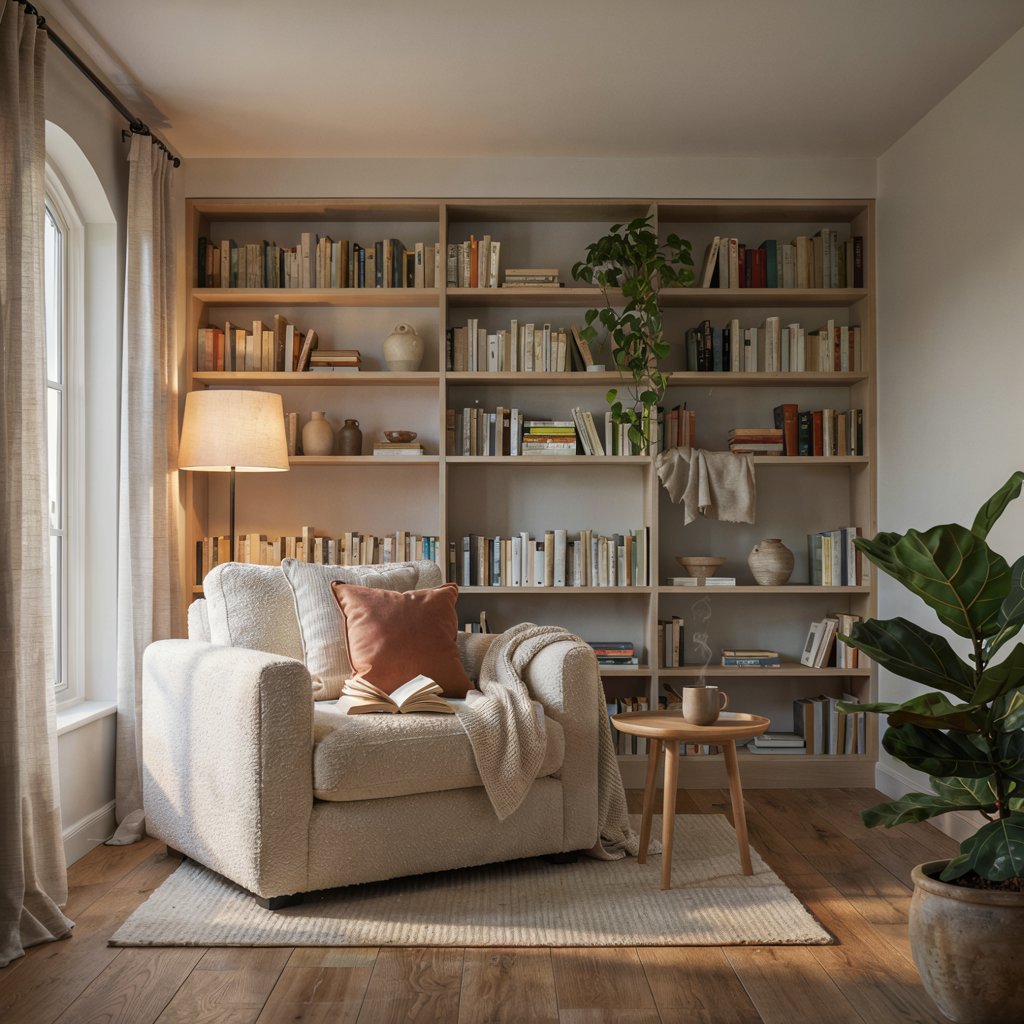
There is something wonderfully comforting about having a little corner of your home that feels completely separate from the noise of everyday life. A cozy reading nook can become that special place. It does not need to be a grand home library, an expensive renovation, or even an entire room. Sometimes, all it takes is an inviting chair, a warm lamp, a soft throw, and a few favorite books to turn an overlooked corner into a beautiful personal escape.
Current interior-design coverage continues to emphasize the same basic principle: successful reading spaces combine comfort, useful lighting, convenient storage, and personal details rather than relying on decoration alone. Recent designer advice also highlights natural light, layered textures, rugs, side tables, and seating that genuinely supports long reading sessions.
The beauty of reading nook ideas is that they can work almost anywhere. A sunny bedroom corner can become a peaceful morning retreat. A forgotten area beside a staircase can become a tiny library. An awkward living-room corner can suddenly feel intentional instead of empty. Even a small apartment can accommodate a reading sanctuary if every piece is chosen with purpose.
So, if you have been dreaming about creating your own cozy corner, this guide will help you design one that feels beautiful without becoming impractical. Think of your reading nook as a small invitation to slow down—a place where the phone can stay across the room, the pages can turn slowly, and an ordinary evening can feel a little more special.
Why Every Home Deserves a Cozy Reading Nook
A reading nook gives your home something that many modern spaces are missing: a dedicated place for quiet. Living rooms often need to serve several purposes at once, bedrooms are frequently associated with sleep, and home offices can make relaxation feel like another task. A reading corner creates a different message. When you sit there, your surroundings tell you that this is your time to read, think, daydream, or simply sit without having to accomplish anything.
That distinction can make a surprisingly big difference in how a room feels. Architectural Digest’s recent collection of reading spaces notes that a nook does not require an expansive home library and can be created in unexpected places, including areas beneath stairs. This is an important idea because it removes the pressure to wait for the “perfect” room. Instead of asking whether your home has enough space, ask which unused space could be given a new purpose.
A successful nook should also feel connected to your personality. Perhaps you love old novels, so a vintage wooden side table and traditional lamp would feel natural. Maybe you prefer contemporary design, in which case a sculptural chair, simple shelves, and neutral colors might suit you better. The goal is not to reproduce someone else’s Pinterest photograph exactly. The goal is to create a corner that makes you want to sit down and stay awhile.
More Than a Place to Read
Although books are the obvious reason for creating a reading nook, the finished space can serve several purposes. You might use it for morning coffee, journaling, listening to music, sketching, knitting, planning your week, or simply taking ten quiet minutes away from household activity. This versatility makes a reading nook especially valuable in smaller homes where every square foot needs to work harder.
The secret is to avoid filling the space with too many competing functions. If you add a television, gaming console, workstation, exercise equipment, and charging station, the nook can quickly become another general-purpose corner. Keep its identity clear. A chair, light, table, books, and a few comforting accessories are often enough.
How to Choose the Perfect Spot
The best location is not necessarily the biggest or most obvious space. Look around your home with fresh eyes. Is there a corner beside a window that rarely gets used? Is there a landing at the top of the stairs? Could the end of a hallway accommodate a narrow chair? Is there a wide bedroom window with enough depth for a cushion? These overlooked areas can have tremendous potential.
Think about traffic, noise, light, and privacy before moving furniture. A reading nook positioned directly beside a busy doorway may look attractive but become frustrating after a few days. Likewise, a beautiful chair placed directly under a harsh ceiling light may never feel relaxing. Recent designer guidance recommends choosing locations with natural light and fewer digital distractions, which makes the position of the nook part of its comfort rather than merely a decorating decision.
Try sitting in the proposed location for a few minutes before buying anything. Imagine yourself there on a rainy afternoon, late at night, and during your favorite reading time. If the spot feels peaceful in those situations, you may have found the right location.
Using Natural Light to Your Advantage
Natural light can make a reading nook feel instantly more inviting. A window provides changing daylight throughout the day and gives the space a visual connection to the outdoors. Morning light can make a bedroom reading corner feel fresh, while softer afternoon light can create the relaxed atmosphere many people associate with curling up with a book.
However, natural light should complement your setup rather than dictate it completely. Direct sunlight can create glare on pages and become uncomfortable during certain hours. Curtains, woven shades, or adjustable blinds allow you to control the intensity without losing the warmth of daylight.
At night, your artificial lighting becomes even more important. A dedicated reading lamp positioned to illuminate the page can make the space functional after sunset, while a softer ambient light can maintain the cozy atmosphere.
Small-Space Location Ideas
Small homes often provide more possibilities than people realize. A narrow corner beside a bookcase can hold a compact armchair. A deep windowsill can become a cushioned bench. An unused closet can potentially become a miniature library-style retreat if the space is suitable and safely ventilated.
Vertical space is particularly valuable. Instead of spreading furniture across the floor, use wall-mounted shelves above or beside the chair. This keeps books close without consuming precious floor area.
Choose Comfortable Seating First
The chair is arguably the most important purchase in your cozy reading nook. Beautiful furniture is not enough if your back begins complaining after twenty minutes. Think about how you actually read. Do you sit upright with a paperback? Do you curl up with a large novel? Do you prefer stretching your legs? Your reading habits should influence the shape and depth of your seat.
An armchair is the classic choice because it provides support without requiring a large footprint. A chaise lounge offers more room to stretch and can create a luxurious atmosphere. A compact lounge chair works well in apartments, while a cushioned bench can make excellent use of a window or alcove.
Recent reading-nook guidance similarly puts comfortable seating near the beginning of the design process, with ottomans recommended when additional leg support or flexibility is desired.
Do not forget the height and firmness of the seat. Extremely soft furniture may look wonderfully inviting but can make it difficult to maintain a comfortable reading position. Try several options if possible. Your favorite chair should make you think, “I could stay here for an hour,” rather than, “That looks good in photographs.”
Armchairs, Chaise Lounges, and Window Seats
An upholstered armchair is ideal if you want flexibility. You can move it when you rearrange the room, change the rug underneath it, or even relocate the entire nook later. Choose a fabric that complements the rest of the room rather than treating the chair as an isolated statement piece.
A chaise lounge creates a more relaxed mood. Pair it with a small round table and floor lamp for a sophisticated reading retreat. If you have a deep window recess, a built-in or freestanding window seat can be even more charming. Good Housekeeping recently highlighted built-in bookshelves paired with window seating as one stylish reading-nook approach.
Create the Right Reading Nook Lighting
Lighting can transform a reading corner from decorative to genuinely useful. A beautiful chair in a dark corner is not much of a reading space. Your goal should be to create layered lighting so that you have enough illumination for the pages without destroying the relaxing mood.
Start with task lighting. A floor lamp beside the chair, adjustable wall sconce, or directional table lamp can provide focused illumination. The light should reach the book without forcing you to twist your body or cast a large shadow across the page.
Then add ambient lighting. A small table lamp, wall light, or softly diffused fixture can make the surrounding area feel warm. Layering these sources gives you more control than relying on one bright overhead fixture. Recent designer advice specifically favors soft, layered lighting and dedicated reading lamps over harsh overhead illumination.
Layered Lighting for Day and Night
During daylight hours, let the window do most of the work. In the evening, combine task and ambient lighting. A dimmable lamp is especially useful because you can increase brightness when reading and reduce it when relaxing.
Avoid placing a very bright light directly behind your head. The position can create shadows over your book and make the reading experience less comfortable. Side lighting is often more practical because it illuminates the page from an angle.
Add a Small Table for Everyday Comfort
A side table may seem like a minor detail, but you will quickly appreciate having one. The ideal table gives you somewhere to place your book, coffee, reading glasses, notebook, or small lamp without requiring you to leave your chair.
You do not need a large coffee table. In fact, a compact round table may be better for a small nook because it provides useful surface area without making the corner visually heavy. A narrow C-table can slide close to the chair, while a small wooden stool can work beautifully in relaxed interiors.
Choose a height that feels natural next to your seating. You should not have to lean dramatically forward to reach your drink or book. The best reading nooks make everyday actions effortless.
Make Books Part of the Decor
Books are not just objects to store; they can become part of the visual identity of your nook. A few carefully arranged shelves can instantly communicate what the space is for. You can organize books by subject, author, color, size, or simply according to the system that makes sense to you.
Floor-to-ceiling shelving creates a dramatic library feeling, but floating shelves are better when floor space is limited. A small ladder-style bookcase can also add vertical storage while keeping the room visually light.
The important thing is to avoid turning every shelf into a wall of clutter. Leave breathing room between groups of books and mix in a few personal objects. A framed photograph, small plant, ceramic piece, or treasured keepsake can make the arrangement feel collected rather than overly staged.
Bookshelves, Floating Shelves, and Baskets
Closed storage is useful if you want a cleaner appearance. Baskets can hold magazines, blankets, notebooks, or books that you are currently reading. Open shelves are better when you want your collection to become part of the decoration.
For a small nook, consider installing two or three floating shelves vertically rather than one long shelf horizontally. This draws the eye upward and uses wall space efficiently.
Layer Rugs, Pillows, and Soft Throws
Texture is what turns a functional chair into a cozy reading corner. Start with a rug if the floor allows it. A rug visually defines the nook and creates a sense of separation from the surrounding room. This is especially helpful when your reading space shares an open-plan living room or bedroom.
Then add one or two pillows. Avoid filling the chair so completely that you have to remove half the decoration before sitting down. A lumbar pillow can provide useful support while adding another layer of texture.
Finally, add a throw blanket. A knitted, woven, quilted, or brushed fabric can instantly make the space feel warmer. Current reading-nook styling advice repeatedly emphasizes natural textures and layered fabrics as simple ways to increase comfort and visual warmth.
Choose a Calming Color Palette
Color has a huge influence on the personality of your reading nook. Warm neutrals such as cream, beige, oatmeal, taupe, and soft brown create a timeless atmosphere. Earthy shades such as olive, terracotta, clay, muted blue, and moss can make the corner feel connected to nature.
If you prefer dramatic interiors, consider a deeper color. Forest green, charcoal, navy, chocolate brown, or muted plum can create an intimate library feeling. Painting the nook wall—or even the entire small alcove—in a richer shade can visually distinguish it from the rest of the room.
The trick is balance. If the chair, rug, walls, cushions, shelves, and accessories are all competing for attention, the corner can become visually tiring. Choose one dominant color family and add smaller contrasting details.
Warm Neutrals, Earthy Shades, and Moody Colors
Warm neutrals work particularly well when you want your nook to feel bright and peaceful. Pair cream upholstery with natural wood, woven baskets, and soft brown accents for a relaxed look.
Earthy palettes create a more organic atmosphere. Olive green with oak wood and linen textures can feel sophisticated without becoming formal.
Moody colors are ideal if your dream reading space resembles an old library. Dark walls, warm wood, brass details, and amber lighting can create a cocoon-like environment that feels wonderfully separate from the rest of the house.
Bring Nature Into Your Reading Corner
Plants can make a reading nook feel alive. A tall plant beside the chair can visually frame the space, while a small plant on the side table adds a touch of softness. If your nook has strong natural light, choose a plant that suits those conditions rather than selecting one based solely on appearance.
You can also bring nature indoors through materials. Wood, rattan, linen, cotton, jute, and woven fibers add tactile warmth. These materials work particularly well in reading spaces because they create a relaxed feeling without requiring excessive decoration.
A view of greenery outside can be equally valuable. If your window overlooks a garden, tree, balcony, or even a quiet street, orient the chair so that you can occasionally look up from the page.
Create a Cozy Reading Nook in a Bedroom
A bedroom is naturally suited to reading because it already has a quiet, private atmosphere. Instead of placing the chair directly beside the bed, consider using a distant corner to create a separate zone. This makes the reading nook feel like its own destination.
A bedroom reading nook can be particularly useful if you want to reduce the temptation to read while lying in bed. A supportive chair, warm lamp, and small table give you another place to settle down before sleep.
Keep the palette connected to the bedroom. If the room uses soft beige bedding, natural wood, and cream curtains, repeat those elements in the nook. Repetition makes the furniture feel intentional rather than randomly added.
Transform an Unused Living Room Corner
Living rooms often contain awkward corners that become dumping grounds for bags, toys, laundry, or random furniture. A reading nook can give that space a clear purpose.
Place a chair at a slight angle rather than pushing it rigidly into the corner. Add a small table, floor lamp, and rug underneath. If the room is large, use the rug to visually separate the reading area from the sofa and television.
The result can be especially effective in an open-plan home. Instead of creating physical walls, you are creating visual zones. One part of the room becomes conversational, another becomes entertainment-focused, and another becomes your quiet reading retreat.
Clever Reading Nooks for Small Homes
Small spaces do not eliminate the possibility of a beautiful reading nook. They simply require more careful decisions. Look for furniture with a small footprint and prioritize vertical storage.
A narrow armchair can replace an oversized lounge chair. A wall-mounted lamp can replace a floor lamp. A floating shelf can replace a bulky bookcase. A small stool can replace a side table.
Another useful trick is to choose furniture that serves more than one purpose. A storage ottoman can support your feet while hiding blankets. A bench can provide seating and book storage underneath. A narrow console beside a chair can function as both display space and reading storage.
Build a Window Reading Nook
Few reading spaces feel as naturally inviting as a window reading nook. The combination of daylight, outdoor views, and a comfortable seat creates an environment that feels connected to the world while still providing a sense of retreat.
If you have a deep window ledge, add a custom cushion and several washable covers. If the ledge is not deep enough, position a compact chair directly in front of or beside the window.
Use curtains or shades to control glare. The goal is to enjoy the window without allowing direct sunlight to make the page difficult to see. A nearby adjustable lamp ensures the nook remains functional after sunset.
Turn an Under-Stair Space Into a Book Retreat
That strange triangular space beneath a staircase may be one of the most charming places in your home for a reading nook. Architectural Digest specifically features under-stair reading spaces among its recent examples, demonstrating how unusual architectural leftovers can become dedicated reading retreats.
Depending on the dimensions, you might install a built-in bench with drawers underneath, add cushions, mount narrow shelves, and finish the area with a wall lamp. The result can feel almost like a secret room.
Keep safety and access in mind, particularly around stairs and electrical installations. The space should feel tucked away without becoming difficult to enter or exit.
Design a Reading Nook for Kids
A children’s reading nook should make books feel exciting rather than obligatory. Bright colors, playful cushions, low shelves, floor mats, and accessible book storage can encourage children to choose reading independently.
Place books where children can see the covers rather than hiding everything on high shelves. A low bookshelf or forward-facing display ledge makes the collection easier to browse.
Comfort matters here too. A soft floor cushion, small upholstered chair, beanbag-style seat, or built-in bench can work depending on the child’s age and the room. Add a small reading light where appropriate and keep cords safely managed.
Budget-Friendly Reading Nook Ideas
You do not need a huge decorating budget to create an attractive reading retreat. The biggest investment should usually be the seating because comfort determines whether the space gets used. Everything else can be added gradually.
Thrift stores, secondhand marketplaces, existing furniture, and simple DIY projects can reduce costs dramatically. A previously unused chair can become the foundation of the nook after a new cushion or washable cover. A wooden stool can become a side table. A secondhand bookshelf can become a beautiful storage feature after a simple refresh.
| Reading Nook Element | Budget-Friendly Alternative | Why It Works |
|---|---|---|
| Armchair | Thrifted or existing accent chair | Provides the essential seating without requiring new furniture |
| Side table | Wooden stool or small pedestal | Compact and inexpensive |
| Bookshelf | Floating shelves | Saves floor space |
| Rug | Small washable rug | Defines the nook visually |
| Throw | Existing blanket | Adds warmth and texture |
| Lighting | Adjustable table or floor lamp | Provides focused reading light |
| Decor | Framed prints, plants, personal objects | Makes the space feel personal |
| Storage | Woven baskets | Hides blankets and extra books |
The best budget strategy is to build the nook in stages. Start with the chair and lighting. Once you know you actually use the space, add the rug, shelves, pillows, plants, and decorative details.
Common Reading Nook Mistakes to Avoid
One of the most common mistakes is prioritizing appearance over comfort. A chair might look incredible online but feel terrible after thirty minutes. Always think about how the furniture supports your actual reading habits.
Another mistake is insufficient lighting. Decorative lamps are lovely, but your nook still needs useful task illumination. A beautiful space that strains your eyes or leaves pages in shadow will quickly become unused.
Too much clutter can also defeat the purpose. The reading nook should feel like an escape, not another storage zone. Keep frequently used items nearby and everything else elsewhere.
Finally, avoid forcing the nook into a location simply because it looks good in a photograph. Your own home’s light, traffic patterns, noise levels, and available space matter more than trends.
Reading Nook Essentials at a Glance
| Essential | Recommended Approach | Main Benefit |
|---|---|---|
| Seating | Supportive armchair, chaise, bench, or window seat | Long-lasting comfort |
| Lighting | Task lamp plus ambient light | Better visibility and atmosphere |
| Table | Compact side table or stool | Keeps essentials within reach |
| Books | Open shelves or compact bookcase | Combines storage with decoration |
| Rug | Small or medium area rug | Defines the space |
| Textiles | Throw and one or two pillows | Adds softness |
| Color | Warm neutrals or earthy shades | Creates a calm mood |
| Plants | One or two suitable plants | Adds natural character |
| Storage | Basket, drawers, or shelves | Prevents clutter |
| Personal touches | Art, photographs, keepsakes | Makes the nook yours |
The most successful reading nooks are not necessarily the most expensive. They are the spaces where every element has a reason to exist. The chair is comfortable, the lamp is useful, the books are accessible, and the textures invite you to stay.
Conclusion
Creating a cozy reading nook at home is really about creating permission to pause. You do not need a mansion, a dedicated library, or a designer renovation. You need one overlooked piece of space and a thoughtful combination of comfort, lighting, storage, texture, and personality.
Start with the location. Find somewhere that feels naturally peaceful and, whenever possible, benefits from daylight. Choose your seating carefully because comfort should come before aesthetics. Add a useful reading light, a small surface for your essentials, and storage that keeps your favorite books close.
Then let the personality develop gradually. Add a rug, a soft throw, a pillow, a plant, artwork, or a treasured object. There is no need to finish everything in one weekend. In fact, a nook often feels better when it evolves naturally around the person who uses it.
Whether your dream is a dramatic library corner, a sunlit window seat, a tiny apartment reading corner, or a secret space beneath the stairs, the principle remains the same: make it comfortable enough to use and beautiful enough to love.
A good reading nook is more than home decor. It becomes a little ritual. You sit down, open a book, put the outside world on pause, and disappear for a while. And sometimes, that tiny escape is exactly what a home needs.
FAQs
1. What is the most important feature of a cozy reading nook?
Comfortable seating is the most important feature because the nook needs to support you for extended reading sessions. Choose a chair, chaise, bench, or window seat based on how you naturally sit while reading. Good lighting should be the next priority.
2. Can I create a reading nook in a very small room?
Absolutely. A small armchair, wall-mounted lamp, floating shelves, and compact side table can fit into surprisingly little space. Corners beside windows, unused hallway areas, bedroom corners, and spaces beneath stairs can all work.
3. What lighting is best for a reading nook?
A combination of natural light, task lighting, and softer ambient lighting works well. During the day, use available daylight while controlling glare with curtains or shades. At night, use an adjustable lamp positioned to illuminate your pages comfortably.
4. How can I make my reading nook look expensive on a budget?
Focus on texture and consistency rather than expensive objects. Combine a comfortable secondhand chair with a simple rug, warm lighting, natural materials, a few books, and one or two plants. A coordinated color palette can make inexpensive pieces look much more intentional.
5. How do I make a reading nook feel more private?
Use a rug to define the area and position the chair slightly away from the main traffic path. A tall plant, open bookshelf, curtain, folding screen, or strategically placed floor lamp can create a visual boundary without building a wall. Keeping screens and unnecessary clutter away from the nook can also strengthen its sense of escape.
For image converter :