A cozy reading corner can completely change the feeling of a room.
You do not need a huge library, an expensive designer chair, or an entire room dedicated to books. Sometimes, all you need is an unused corner, a comfortable seat, warm lighting, and a little imagination.
The best reading corners feel personal. They invite you to slow down, put your phone away, open a good book, and enjoy a few peaceful minutes.
Whether you live in a small apartment, a modern house, a traditional home, or a compact studio, there is a reading nook idea that can work for you.
In this guide, we will explore designer-inspired reading corner ideas that make a space feel instantly warmer, softer, and more inviting. You will also discover practical styling tips, furniture suggestions, lighting ideas, color combinations, storage solutions, and common mistakes to avoid.
What Makes a Reading Corner Feel Cozy?
A beautiful reading corner is about more than placing a chair beside a bookshelf.
Comfort is the foundation. After that comes lighting, texture, color, storage, and personality.
Designers often create cozy spaces by layering several simple elements instead of relying on one expensive statement piece.
Think of your reading corner as a small retreat within your home.
A comfortable chair gives you somewhere to relax. A soft throw adds warmth. A side table keeps your essentials nearby. A floor lamp provides focused light. A few books and decorative objects make the area feel lived-in.
For Image Converter :
The Five Essentials of a Cozy Reading Nook
| Element | Why It Matters | Simple Idea |
|---|---|---|
| Comfortable seating | Encourages longer reading sessions | Armchair, lounge chair, bench, or floor cushion |
| Good lighting | Prevents eye strain and creates ambiance | Floor lamp, wall sconce, or table lamp |
| Soft textures | Makes the corner feel warm | Throw blanket, cushion, rug |
| Book storage | Keeps favorite books within reach | Small shelf, basket, or side table |
| Personal details | Gives the space character | Artwork, plant, candle, or framed photo |
The key is balance.
You want the corner to feel decorated but not crowded. Comfortable but not messy. Stylish but still practical.
1. Start With an Unused Corner
Before buying anything, walk through your home and look for forgotten spaces.
An empty corner beside a window can become a beautiful reading retreat. The space beside a staircase may work surprisingly well. Even the unused area next to a bedroom wardrobe can sometimes accommodate a slim chair and lamp.
Do not automatically assume that you need a large area.
A reading nook can be surprisingly compact.
Measure the available space before purchasing furniture. You should have enough room to sit comfortably and move around without making the rest of the room feel cramped.
Small-Space Tip
For apartments and smaller bedrooms, choose furniture with a narrow profile.
A compact accent chair paired with a slim floor lamp may be all you need.
If the space is extremely limited, consider a wall-mounted shelf instead of a traditional bookcase.
2. Place Your Reading Chair Near a Window
Natural light can make a reading corner feel instantly more inviting.
If possible, position your chair near a window where you can enjoy daylight without sitting directly in harsh sunlight.
A window reading nook can also give you something pleasant to look at when you take a break from your book.
Imagine a soft armchair beside a window, a small wooden table nearby, and a knitted blanket casually draped over the arm.
The result does not need to be complicated.
Avoid Direct Glare
Although natural light is wonderful, direct sunlight can make reading uncomfortable.
If your window receives strong afternoon sun, use sheer curtains or adjustable blinds. This allows you to soften the light while keeping the corner bright.
3. Choose a Chair That Actually Feels Comfortable
A reading nook may look beautiful in photographs, but comfort should always come first.
A chair that looks stylish but provides poor support will quickly become decorative rather than functional.
Look for supportive cushions, a comfortable seat depth, and enough back support for the way you normally read.
An upholstered armchair is a classic choice.
For a more relaxed atmosphere, you might choose a deep lounge chair. In a minimalist home, a structured accent chair can create a cleaner appearance.
If you love casual interiors, a floor cushion or oversized beanbag can create a completely different mood.
Designer Trick: Consider the Scale
The chair should match the proportions of the room.
A huge lounge chair can overwhelm a tiny bedroom.
Likewise, a very small chair may look lost in a spacious living room.
Choose a piece that feels visually balanced with the surrounding furniture.
For more info :
Home Styling Mistakes Designers Never Make | What to Do Instead
4. Add a Soft Rug Underneath
A rug is one of the easiest ways to make a reading corner feel more finished.
It visually defines the nook and separates it from the rest of the room.
You do not necessarily need a large rug.
A small round rug beneath the chair can be enough to create a distinct zone. A rectangular rug can work better when the reading corner includes a chair, side table, and floor lamp.
Soft materials are particularly effective in reading spaces.
Wool, cotton, woven fibers, and plush textures can make the area feel warmer.
Best Rug Colors for Reading Nooks
Neutral colors are timeless.
Cream, beige, oatmeal, warm gray, taupe, muted brown, and soft ivory can create a calm environment.
If your room already contains neutral furniture, consider adding a subtle pattern through the rug.
5. Create Warm Lighting
Lighting can completely transform the atmosphere of a reading corner.
During the day, natural light may be enough.
At night, however, you need a dedicated reading light.
A floor lamp beside the chair is one of the easiest solutions. A table lamp works beautifully when you have a side table. Wall-mounted sconces are ideal if you want to save floor space.
Warm white lighting usually creates a more relaxed atmosphere than very cool, bright lighting.
Layer Your Lighting
For a designer-inspired effect, avoid relying on only one light source.
Combine:
- A reading lamp for focused light
- Ambient lighting for general warmth
- Decorative lighting for atmosphere
A small table lamp or soft wall light can make the corner feel cozy even when you are not reading.
6. Add a Side Table
A side table may seem like a minor detail, but it makes a reading corner significantly more functional.
You need somewhere to place your book, coffee, tea, glasses, phone, or reading lamp.
The table does not need to be large.
A small round table can work beautifully beside an armchair. A narrow C-shaped table is another clever option for compact spaces.
For a natural look, consider wood.
For modern interiors, glass or metal can create a lighter visual effect.
What to Keep on the Table
Try not to turn your side table into a storage pile.
Keep only a few useful or beautiful objects.
A book, small plant, ceramic cup, lamp, or decorative bowl can be enough.
7. Layer Cushions and Throws
Texture is one of the secrets behind a cozy interior.
A reading chair can become much more inviting with one or two cushions and a soft throw.
You do not need to perfectly arrange everything.
In fact, a casually draped blanket often looks more natural than one folded with excessive precision.
Mix different textures.
For example:
- Linen cushion
- Knitted throw
- Velvet accent pillow
- Woven rug
The contrast creates visual depth.
Don’t Overdo the Textiles
Too many cushions can make the chair uncomfortable.
Remember that the reading nook is supposed to be used.
Choose softness without sacrificing usable seating space.
8. Build a Reading Nook Around a Bookshelf
If you have enough space, placing your chair next to a bookshelf can create a complete reading station.
A tall bookshelf provides plenty of storage, while a comfortable chair creates a natural place to enjoy the collection.
You can style the shelves with more than books.
Add a few plants, framed photographs, pottery, artwork, or small decorative objects between groups of books.
This prevents the shelving from looking overly uniform.
Style Books by Mood
You can organize books traditionally by author or genre.
However, decorative styling can also involve grouping books by size, color, or visual balance.
Do not sacrifice accessibility for appearance.
Your favorite books should still be easy to reach.
9. Try a Built-In Window Seat
If your home has a deep window area, a built-in reading bench can create a dreamy reading nook.
Add a thick cushion across the seat and several pillows against the wall.
Storage drawers underneath the bench can provide valuable space for books, blankets, games, or other items.
This is particularly useful in smaller homes because one feature can perform several functions.
A window seat can become a reading area during the day and additional seating when guests visit.
10. Use a Wall-Mounted Reading Light
Floor lamps look beautiful, but they are not always practical.
If you are working with limited floor space, consider a wall-mounted reading light.
Adjustable sconces are especially useful because you can direct the light toward your book.
They also create a more intentional, architectural appearance.
A pair of sconces can look particularly elegant when used around a built-in bench.
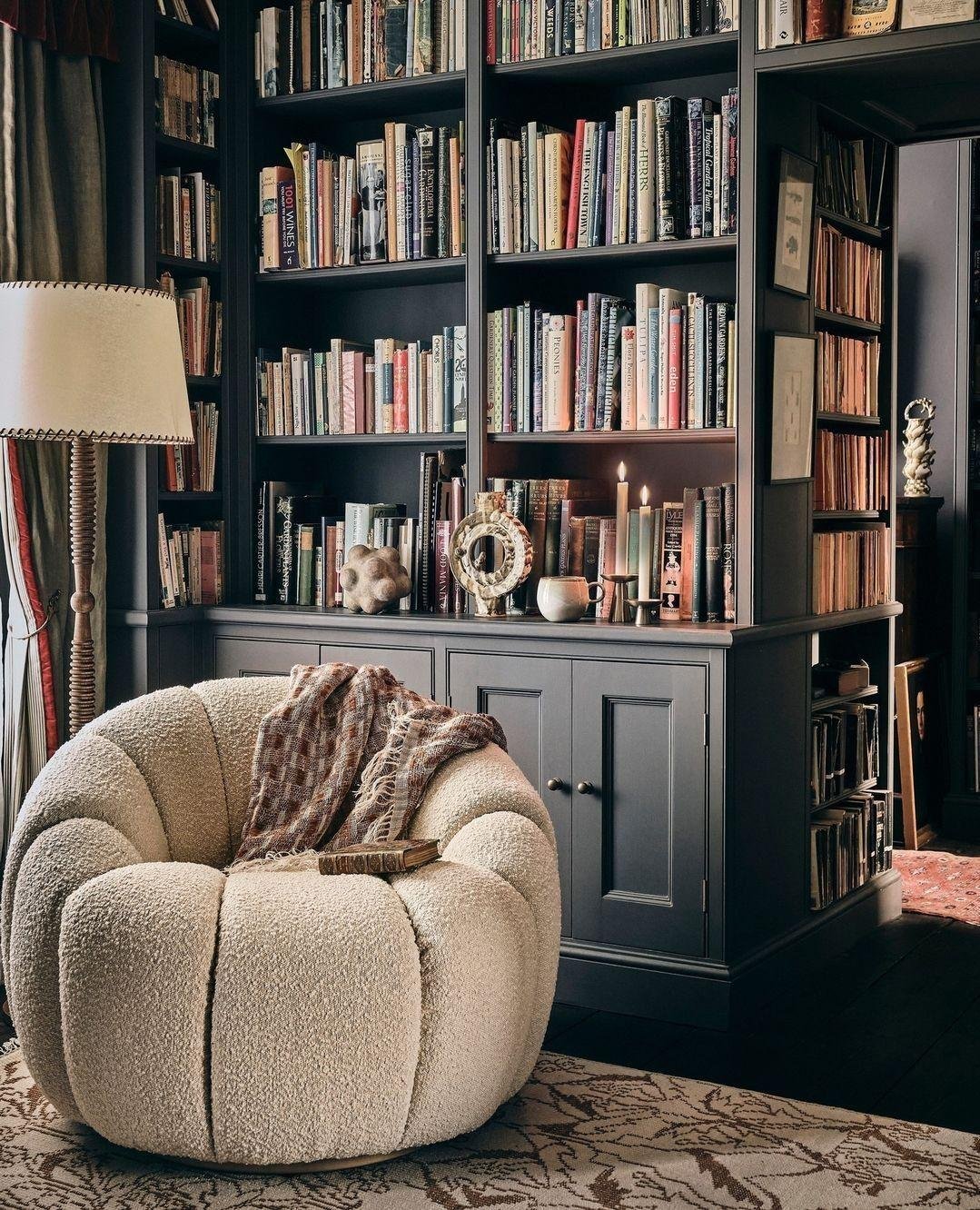
11. Create a Moody Reading Corner
Not every reading nook needs to be bright and airy.
Dark colors can create an intimate, sophisticated atmosphere.
Consider deep green, navy, charcoal, warm brown, muted burgundy, or dark taupe.
Pair darker walls with warm lighting and comfortable textiles.
The result can feel like a private little library.
Balance Dark Colors With Texture
A dark reading corner can become too heavy if every element is the same shade.
Introduce lighter cushions, natural wood, woven materials, or cream-colored books to create contrast.
Warm brass or aged metal accents can also work beautifully in a moody reading nook.
12. Keep It Light and Minimal
If you prefer Scandinavian or minimalist interiors, keep your reading nook simple.
Choose one comfortable chair, one small table, one lamp, and perhaps a plant.
Avoid filling every empty surface.
A minimalist reading corner can actually feel more relaxing because there are fewer visual distractions.
Use neutral colors and natural materials to create a peaceful atmosphere.
Minimalist Doesn’t Mean Empty
The goal is not to remove all personality.
A favorite artwork, handmade ceramic piece, or small collection of books can make the area feel personal without creating clutter.
13. Add Plants for a Natural Feeling
Plants can soften the appearance of furniture and introduce natural color.
A small plant can sit on a side table.
A taller plant can stand beside the chair.
If your reading corner has plenty of natural light, you have more options. For darker spaces, choose plants that tolerate lower light conditions.
Do not overcrowd the area.
One or two carefully positioned plants often have more impact than a jungle of pots.
14. Create a Cozy Reading Corner in the Bedroom
Your bedroom may already be the quietest room in the home, making it an excellent location for a reading nook.
Place a small chair near a window or in an unused corner.
Add a warm lamp and a soft throw.
If the bedroom is small, a compact chair or bench can provide the perfect solution.
A reading corner can also create a useful transition between sleeping and relaxing.
Instead of scrolling on your phone in bed, you can sit in your reading chair for a few minutes before going to sleep.
15. Turn a Living Room Corner Into a Reading Retreat
A living room reading corner does not need to be separated from the rest of the space.
Use an accent chair to create a visual zone.
A rug underneath can make the separation more obvious.
Place a side table and lamp beside the chair, then add a basket underneath for books or blankets.
This arrangement works particularly well in open-plan homes.
It gives you a quiet personal space without requiring a separate room.
16. Design a Reading Nook for Kids
Children deserve cozy reading spaces too.
A child-friendly reading corner can encourage independent reading and make books feel exciting.
Consider a low bookshelf where children can see the covers.
Add a comfortable floor cushion, soft rug, and small reading light.
You can also create a canopy-style nook using fabric, provided it is installed safely and securely.
Keep Kids’ Reading Areas Practical
Avoid delicate furniture and fragile decorations.
Choose washable textiles and sturdy storage.
Make the books easy for children to reach themselves.
The goal is to create a space they actually want to use.
17. Use a Basket for Blanket and Book Storage
A large woven basket is a simple addition that can make a reading corner look more organized.
Place it beside the chair and use it for blankets, magazines, or extra cushions.
It is particularly useful if you do not have room for a bookshelf.
Choose a basket that complements the room’s existing materials.
Natural woven baskets work beautifully with coastal, farmhouse, bohemian, Scandinavian, and organic-modern interiors.
18. Add a Small Personal Gallery Wall
Your reading nook should feel like your space.
One easy way to personalize it is with artwork.
Hang one large print above the chair or create a small gallery wall.
Choose artwork that makes you feel relaxed.
Botanical illustrations, landscapes, abstract artwork, literary prints, and personal photographs can all work well.
Keep the arrangement visually connected to the rest of the room.
19. Choose a Calming Color Palette
Color has a major effect on how a reading corner feels.
If you want relaxation, avoid creating an overly chaotic palette.
Consider combining three or four related shades.
For example:
| Style | Main Colors | Accent Colors |
|---|---|---|
| Warm Neutral | Cream, beige, oatmeal | Brown, terracotta |
| Modern | White, gray, charcoal | Black, muted green |
| Nature Inspired | Sage, cream, tan | Olive, wood tones |
| Cozy Cottage | Ivory, dusty blue | Soft green, warm brown |
| Moody | Deep green, brown | Brass, cream |
| Soft Feminine | Blush, ivory, beige | Terracotta, muted rose |
The colors do not need to match perfectly.
They simply need to feel like they belong together.
20. Make the Nook Feel Like a Personal Retreat
The most beautiful reading corners often contain small details that have nothing to do with design trends.
Maybe you keep a handwritten journal nearby.
Maybe there is a favorite mug on the side table.
Maybe a family photograph sits on the shelf.
Maybe you keep a stack of books you have been meaning to read.
These details make the space feel authentic.
A designer-inspired room should still look like someone lives there.
Reading Corner Ideas for Different Home Styles
Your reading nook should complement the architecture and style of your home.
Modern Reading Corner
Choose clean lines, simple furniture, neutral colors, and sculptural lighting.
A curved chair can soften a contemporary room without making it look traditional.
Farmhouse Reading Nook
Use natural wood, woven baskets, linen textiles, vintage-inspired furniture, and warm neutral colors.
A chunky knitted blanket can add instant coziness.
Bohemian Reading Corner
Layer textiles, plants, patterned cushions, woven materials, and low seating.
Do not worry about everything matching perfectly.
The charm comes from the relaxed combination of textures and patterns.
Scandinavian Reading Nook
Focus on light colors, natural wood, simple furniture, and functional accessories.
Keep the space uncluttered but warm.
Traditional Reading Corner
An upholstered armchair, wooden side table, classic lamp, and elegant artwork can create a timeless library-inspired feeling.
Small Reading Nook Ideas for Apartments
Limited space does not mean you have to give up on a reading corner.
Look vertically.
A wall-mounted shelf can provide book storage without taking up floor space.
Choose a narrow chair rather than a large lounge chair.
Use a wall sconce instead of a floor lamp.
A small stool can serve as both a side table and extra seating.
You can even use the corner beside your bed if the bedroom layout allows it.
Multi-Functional Furniture Is Your Friend
In a small home, every piece should ideally perform more than one function.
A storage ottoman can provide seating, foot support, and hidden storage.
A bench with drawers can become both seating and book storage.
A small desk can function as a writing station and reading area.
How to Make a Reading Corner Look Expensive
You do not need a luxury budget to create an elegant reading nook.
Focus on presentation.
Keep the area tidy.
Choose fewer but better-looking accessories.
Use warm lighting.
Introduce natural materials.
Mix textures.
Hang artwork at an appropriate height.
Most importantly, choose furniture that looks proportional to the space.
The Expensive-Looking Formula
A simple formula is:
Comfort + Warm Lighting + Texture + Natural Material + Personal Detail = Designer-Looking Reading Nook
The magic usually comes from layering rather than spending more money.
Budget-Friendly Reading Corner Ideas
Creating a cozy reading nook does not have to involve a complete furniture makeover.
Start with what you already own.
Move an existing chair into an unused corner.
Add a blanket from another room.
Use a small stool as a side table.
Place your favorite books on a stack.
Add a secondhand lamp or thrifted basket.
Rearranging furniture can sometimes make a bigger difference than buying new pieces.
Shop Your Own Home First
Before purchasing decorations, look around your house.
You may already have:
- An unused accent chair
- A spare cushion
- A floor lamp
- A small table
- A decorative basket
- Extra artwork
- A houseplant
- A cozy blanket
Combine these pieces in a new way.
You might be surprised by how different they look when grouped together.
Reading Corner Styling Mistakes to Avoid
Even a small reading nook can become uncomfortable or visually messy if it is poorly planned.
Mistake 1: Choosing Style Over Comfort
A beautiful chair is useless if you cannot sit in it for 30 minutes.
Always test comfort before making a purchase.
Mistake 2: Ignoring Lighting
A reading corner without adequate lighting may look attractive during the day but become unusable at night.
Add a dedicated reading light.
Mistake 3: Overcrowding the Corner
Too many accessories can make the space feel cramped.
Leave enough room to move around comfortably.
Mistake 4: Using Too Many Colors
A chaotic color palette can make a small corner feel visually stressful.
Choose a few complementary shades.
Mistake 5: Forgetting Storage
Books, magazines, blankets, and reading glasses need somewhere to go.
A small basket or shelf can prevent clutter.
Mistake 6: Making Everything Too Perfect
A reading nook should feel inviting, not like a showroom.
A casually placed book or slightly rumpled throw can make the space feel more natural.
A Simple Reading Nook Shopping Checklist
If you are starting from scratch, you do not need to buy everything at once.
Use this checklist:
- Comfortable chair
- Reading lamp
- Small side table
- Soft throw
- One or two cushions
- Small rug
- Book storage
- Plant or decorative object
- Artwork
- Personal accessories
Start with the chair and lighting.
Then add accessories gradually.
This approach also makes it easier to discover what the space actually needs.
How to Arrange Everything Like a Designer
Begin with the largest item: the chair.
Position it where it feels natural in the room.
Next, place the light source beside it.
Add the side table close enough to reach without standing.
Place a rug underneath or slightly in front of the chair.
Then add your soft furnishings.
Finally, introduce books, plants, artwork, and decorative accessories.
Step back and look at the entire corner.
If something feels crowded, remove one item.
If it feels too empty, add texture rather than another large piece of furniture.
The Perfect Reading Nook Doesn’t Have to Be Perfect
There is a temptation to make every corner of a home look like a magazine photograph.
But the best reading spaces are not necessarily the most polished ones.
They are the spaces that make you want to sit down.
A cozy reading nook might have a slightly worn chair, a stack of well-loved books, a blanket that never gets folded properly, and a mug that somehow always ends up on the side table.
That is part of the charm.
Your reading corner should support your lifestyle rather than create another space you feel pressured to maintain.
Final Thoughts: Create a Corner You’ll Actually Use
A designer-inspired reading corner is less about expensive furniture and more about creating the right atmosphere.
Start with comfort.
Add practical lighting.
Introduce soft textures.
Keep your favorite books within reach.
Use color thoughtfully.
Then finish the space with personal details that make you happy.
Whether you have an entire room or only a tiny corner beside a window, you can create a peaceful place to escape into a good book.
The most important rule is simple: design the reading nook for yourself, not for a photograph.
When the chair is comfortable, the lighting is warm, the books are nearby, and the space reflects your personality, even the smallest corner can become your favorite place in the house.
Frequently Asked Questions
What is the best chair for a reading corner?
The best chair is one that provides comfortable back support and allows you to sit naturally for extended periods. Armchairs, lounge chairs, upholstered accent chairs, and supportive recliners can all work well.
How do I create a reading nook in a small room?
Choose compact furniture and use vertical storage. A narrow chair, wall-mounted shelf, small side table, and wall sconce can create a complete reading nook without taking up much floor space.
What lighting is best for reading?
A dedicated adjustable reading lamp is ideal. Warm, comfortable lighting can provide enough illumination while maintaining a relaxing atmosphere.
How can I make my reading corner look cozy?
Layer soft textures such as cushions, throws, and rugs. Add warm lighting, books, natural materials, and a few personal accessories. Avoid overcrowding the area.
Can a reading corner be created without a bookshelf?
Absolutely. Use a small side table, floating shelves, baskets, a storage ottoman, or a simple stack of books. You only need enough storage for the books you currently enjoy.
What colors work best for a cozy reading nook?
Warm neutrals, earthy greens, muted blues, cream, beige, soft brown, and other subdued colors work particularly well. Darker shades can also create a sophisticated library-like atmosphere.
How much space do I need for a reading nook?
You can create a reading nook in surprisingly little space. The essential requirements are enough room for comfortable seating and safe movement around it. Compact furniture makes small corners much easier to use.
Quick Takeaway Table
| Reading Corner Goal | Best Design Solution |
|---|---|
| Make a tiny corner cozy | Compact chair + wall light + small shelf |
| Maximize natural light | Place seating near a window |
| Create a luxury look | Layer textures and use warm lighting |
| Save floor space | Wall shelves + wall-mounted sconces |
| Add more storage | Storage bench or woven basket |
| Create a moody atmosphere | Dark walls + warm lamps + rich textures |
| Keep it minimalist | One chair + one lamp + one table |
| Make it kid-friendly | Low shelving + floor cushions + washable fabrics |
| Create a budget nook | Repurpose existing furniture |
| Make it feel personal | Artwork + favorite books + meaningful accessories |