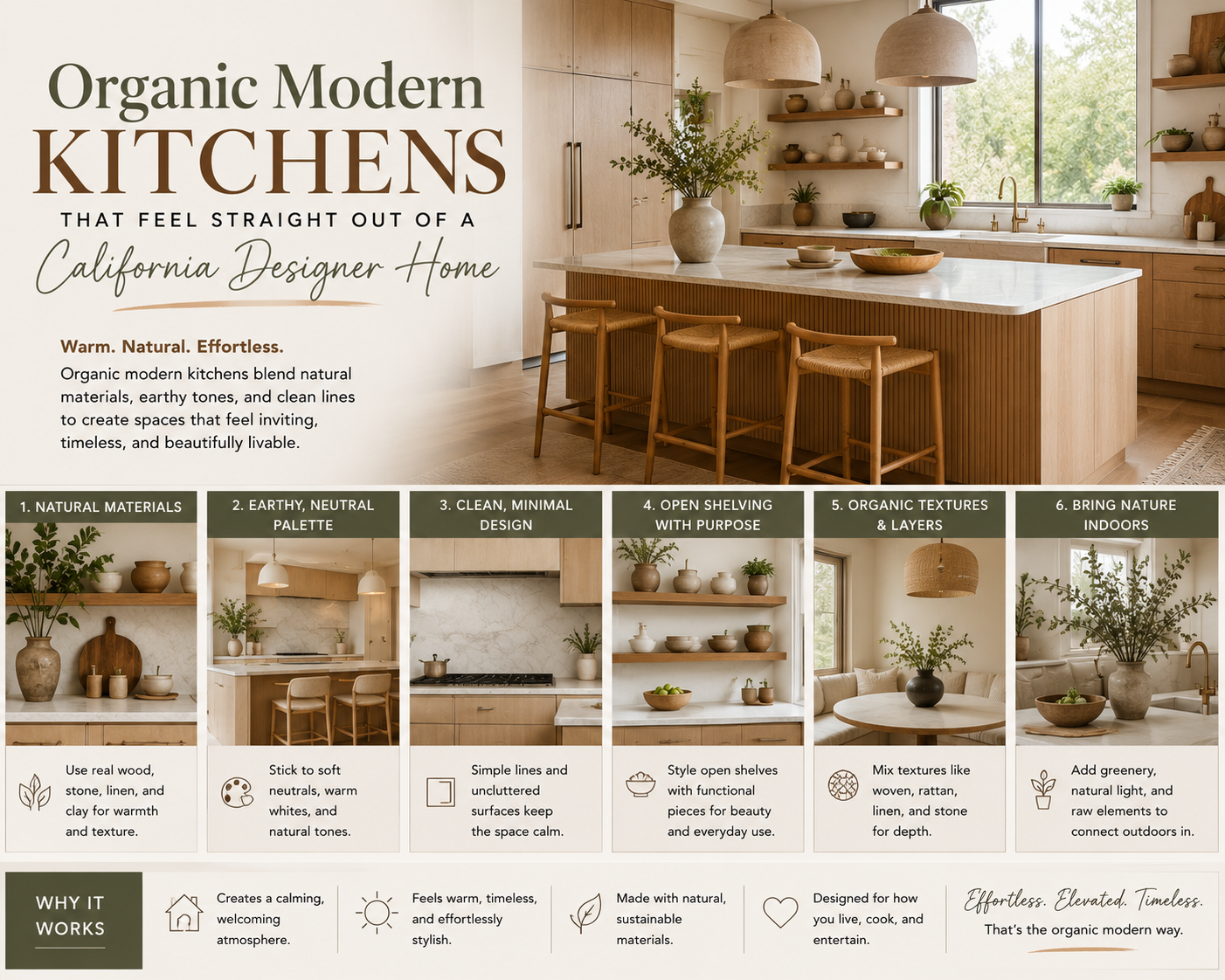
There is something almost magical about a beautiful California designer kitchen. It does not usually feel overly decorated, yet every surface seems intentional. Warm wood catches the sunlight, natural stone adds quiet movement, greenery softens the edges, and the entire room somehow manages to look polished without feeling precious. That relaxed balance is the heart of organic modern kitchen design.
Instead of chasing a showroom-perfect appearance, the style combines contemporary architecture with earthy materials, tactile finishes, comfortable proportions, and a connection to the outdoors. The result is a kitchen that feels calm enough for a slow morning coffee but sophisticated enough to host a dinner party without changing a thing.
Current kitchen research supports several of these design choices. Houzz’s 2025 U.S. Kitchen Trends Study found that engineered quartz remained the most popular countertop material among renovating homeowners at 39%, while quartzite, wood slabs, and marble also remained significant choices. The study also found that 74% of homeowners choosing patterned countertops preferred veined surfaces, a detail that works beautifully with the natural movement associated with organic interiors.
The California-inspired version takes those popular materials and gives them a warmer, more architectural personality. Think less “perfectly coordinated kitchen set” and more “beautiful home that has evolved naturally over time.”
What Makes a Kitchen Feel Organic Modern?
Organic modern design sits comfortably between two worlds. On one side is modernism, with its clean lines, uncluttered surfaces, integrated appliances, simple cabinetry, and restrained decoration. On the other is organic design, which brings in wood, stone, linen, ceramics, plants, natural textures, and imperfect details. When these influences meet, the kitchen becomes neither stark nor rustic. It feels sophisticated, but there is enough warmth and texture to make you want to pull up a chair and stay awhile.
The secret is contrast without chaos. A smooth plaster-style wall can sit beside heavily grained oak cabinetry. A sculptural stone island can be paired with simple flat-panel doors. Matte black fixtures can introduce definition while woven stools or natural-fiber pendants soften the composition. Rather than filling every empty surface, designers allow materials to do the decorating. This is particularly important in a California-inspired kitchen because the goal is often to create an effortless relationship between architecture, landscape, sunlight, and everyday living. The room should look good at 8 a.m. when the counters hold a coffee mug and at 8 p.m. when friends gather around the island.
The California Design Connection
California design has a distinctive relationship with light and landscape. In many contemporary homes, large windows, sliding doors, courtyards, patios, and gardens make the boundary between indoors and outdoors feel less rigid. A kitchen influenced by that philosophy does not need to literally overlook the Pacific Ocean. You can recreate the feeling through generous natural light, warm neutral materials, greenery, uncluttered sightlines, and finishes that echo the surrounding environment.
Recent residential architecture continues to emphasize this relationship between indoor comfort and outdoor connection. A 2026 restoration highlighted by The Wall Street Journal, for example, used skylights, clerestory windows, dark wood, and thoughtful connections between living spaces to restore an inviting indoor-outdoor character. That principle translates beautifully into kitchen design. Instead of treating the kitchen as an isolated work zone, imagine it as part of the larger living environment. The materials should flow naturally into adjacent dining and living areas, creating visual continuity rather than a collection of disconnected rooms.
Why Natural Materials Matter
Natural materials give organic modern kitchens their emotional warmth. Wood has visible grain and variation, stone has movement, handmade ceramics have subtle irregularities, and woven materials introduce softness that manufactured surfaces often lack. These variations prevent a minimalist kitchen from becoming visually flat. They also create the sense that the room was assembled thoughtfully rather than purchased as a matching package.
The beauty of natural materials is that they do not have to dominate the room. A single walnut island can be enough to transform a pale kitchen. A limestone-inspired backsplash can introduce texture without overwhelming the cabinetry. Even a wooden cutting board, ceramic vase, or stone serving bowl can contribute to the aesthetic. The key is repetition: use a few natural materials in several places so the room feels connected. If you choose oak cabinetry, for instance, you might echo its warmth with wood stools, a cutting board, or dining furniture rather than introducing five unrelated wood tones.
The Essential Elements of a California-Style Organic Kitchen
A successful organic modern kitchen is less about following a rigid checklist and more about getting the relationship between materials right. The cabinetry, countertops, flooring, backsplash, hardware, lighting, and accessories should feel like members of the same visual family. You want enough contrast to create interest, but not so much that every surface competes for attention.
One useful approach is to choose a foundation of three major materials: one wood tone, one stone or stone-look surface, and one supporting finish such as plaster, tile, metal, or painted cabinetry. From there, introduce smaller accents. This method prevents the common mistake of collecting beautiful materials individually and discovering later that they do not work together. In a designer kitchen, restraint often creates more luxury than abundance.
Warm Wood Cabinetry
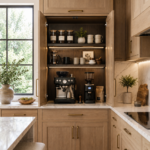
If you want one feature to instantly move your kitchen toward organic modern territory, consider warm wood cabinetry. White oak is particularly useful because it can feel contemporary while still retaining the visual warmth of natural timber. Walnut creates a deeper, richer atmosphere, while lighter ash or oak can make a small kitchen feel airy. The goal is not necessarily to find perfectly uniform boards; natural variation can actually make the finished room more interesting.
Flat-panel or subtly detailed doors work especially well because they allow the wood grain to become the visual feature. Avoid overly glossy finishes if your goal is relaxed California style. A matte or low-sheen finish usually feels softer and more architectural. Current design coverage also shows a broader movement away from dated orange-toned wood and toward cleaner, warmer approaches to cabinetry and natural materials.
Choosing the Right Wood Finish
The undertone matters more than many homeowners realize. Two pieces of “natural oak” can look dramatically different because one leans yellow, another beige, and another slightly pink or brown. Before committing to cabinetry, place samples beside your countertop, flooring, backsplash, and wall color. Check them in morning, afternoon, and evening light because the same finish can shift dramatically throughout the day.
For a distinctly California-inspired appearance, look for wood that feels sun-washed rather than orange. Soft natural oak, light walnut, and muted medium woods can all work beautifully. If your existing floors are already strongly colored, you may want cabinetry with a quieter grain. If the room is mostly pale and neutral, a more expressive wood can become the feature that gives the space personality.
Natural Stone Countertops
Countertops are where an organic modern kitchen can become genuinely spectacular. Quartzite, marble, soapstone, granite, and other natural stones offer patterns that are impossible to reproduce exactly. Veining can create movement across a large island, almost like an abstract landscape painted directly into the architecture.
That does not mean engineered quartz is unsuitable. In fact, Houzz’s 2025 study found it remained the leading countertop choice among renovating homeowners, at 39%. For homeowners who prioritize consistent appearance and practical maintenance, engineered materials can make excellent sense. If the goal is specifically to create a designer California atmosphere, however, prioritize a surface with believable variation, soft movement, and a finish that complements rather than fights with the wood.
Soft, Earthy Color Palettes
The organic modern palette is usually built around warm whites, creamy neutrals, sand, mushroom, taupe, clay, muted green, soft brown, and natural wood. These colors create a background that lets texture become the star. You do not need to make everything beige. In fact, too much sameness can make the kitchen look flat.
Instead, think about temperature and texture. A warm white wall can sit next to pale oak. A creamy stone countertop can contrast with a muted olive island. A mushroom-colored cabinet can work with walnut accents. A small amount of charcoal or matte black can provide structure. Houzz’s research shows that white and off-white remain dominant choices across several kitchen elements, while green and blue appear as more selective cabinet choices.
Designing the Layout for an Effortless Feel
Beautiful materials cannot rescue an awkward kitchen layout. Organic modern kitchens work best when movement feels intuitive. You should be able to move from refrigerator to prep area to cooktop without constantly walking around an island or opening a cabinet into a walkway. The visual simplicity of the style should be supported by practical planning.
This is also where storage becomes important. A calm kitchen needs somewhere to hide everyday clutter. Integrated trash bins, deep drawers, appliance garages, pantry storage, and carefully planned cabinets allow countertops to remain visually quiet. The result is not minimalism for its own sake; it is functional minimalism, where everything has a place and the things you actually use remain easy to reach.
Open Sightlines and Indoor-Outdoor Flow
If your architecture allows it, position the kitchen so that it connects visually with a dining area, living room, garden, patio, or courtyard. Large windows and glass doors can make a major difference, but even a smaller opening can help. Avoid blocking important sightlines with unnecessarily tall cabinets when a lower storage solution would work.
A California-inspired kitchen should feel as though the landscape is part of the design. Place herbs near a sunny window, use natural greenery where appropriate, and choose finishes that visually relate to exterior materials. If your home has stone outside, echo that tone inside. If the surrounding landscape is full of mature trees, warm wood cabinetry can create a natural visual bridge.
The Kitchen Island as a Gathering Place
The island is more than a countertop. In an organic modern kitchen, it often becomes the social center of the home. A generous island can provide prep space, storage, casual seating, and a place where people naturally gather while food is being prepared.
For a designer appearance, consider making the island visually distinct from the perimeter cabinetry. A warm walnut island against creamy cabinets can create depth without requiring a dramatic color. Alternatively, use the same cabinetry but let the countertop become the feature. Rounded corners, substantial stone edges, or carefully selected stools can make the island feel custom rather than generic.
Lighting That Creates Designer-Level Warmth
Lighting can make or break an organic modern kitchen. Natural daylight should be maximized whenever possible, but artificial lighting needs equal attention. A single bright ceiling fixture can flatten the textures that make the room special. Instead, build layers: ambient lighting for general visibility, task lighting for preparation, and decorative lighting for atmosphere.
Pendant lights above an island are a classic opportunity to add personality. Choose materials such as aged metal, plaster, linen, ribbed glass, ceramic, or hand-finished surfaces. The fixture should feel sculptural without becoming visually aggressive. Under-cabinet lighting can provide practical illumination while also highlighting a beautiful backsplash or countertop edge.
Backsplash Ideas That Feel Expensive but Timeless
The backsplash is an opportunity to introduce texture without adding clutter. Handmade-look ceramic tile, honed stone, marble, quartzite, limestone-inspired surfaces, and subtle zellige-style tiles can all complement organic modern cabinetry. A slab backsplash creates an especially clean appearance because there are fewer grout lines interrupting the visual flow.
Houzz reported that 76% of renovating homeowners selected tile for upgraded backsplashes, while 24% chose slab materials. Full coverage to the cabinets or range hood was the most common approach at 67%, and ceiling-height backsplash applications had increased to 12%. For an upscale California-inspired kitchen, extending a quiet stone surface behind the range can create a dramatic focal point while keeping the rest of the room restrained.
Hardware, Fixtures, and Finishing Details
Hardware should support the architecture rather than dominate it. Long pulls, simple knobs, integrated handles, and minimal edge pulls can all work. Brass, bronze, brushed nickel, and matte black each create a different mood. Aged or unlacquered finishes are particularly appealing if you like materials that develop character over time.
The same principle applies to faucets. A sculptural faucet can become a small architectural detail, especially when paired with a deep undermount or apron-front sink. Recent designer commentary continues to favor practical, visually integrated features such as paneled appliances and finishes that develop patina rather than looking permanently factory-perfect.
Organic Modern Kitchen Styling Ideas
Styling should be deliberately restrained. You do not need a countertop covered with decorative objects to make the kitchen look finished. Instead, select a few meaningful pieces: a large ceramic vessel, a wooden cutting board, a bowl of citrus, a linen runner, fresh branches, or handmade pottery.
Plants are especially effective because they bring the outside in without making the room feel decorated. A small herb garden near a window can be both useful and beautiful. A sculptural branch in a ceramic vase can add height. Even a bowl of seasonal fruit can introduce color without disrupting the neutral palette. Current interior design discussions continue to highlight biophilic design—the incorporation of nature into interiors—as an important direction for residential spaces.
Organic Modern Kitchen Materials at a Glance
| Kitchen Element | Best Organic Modern Choices | Designer Effect | Budget-Friendly Alternative |
|---|---|---|---|
| Cabinets | White oak, walnut, ash | Warm and architectural | Wood-look laminate or painted cabinets |
| Countertops | Quartzite, marble, soapstone | Natural movement and luxury | Engineered quartz |
| Backsplash | Slab stone, handmade-look tile | Refined and tactile | Ceramic tile |
| Hardware | Aged brass, bronze, matte black | Subtle contrast | Simple brushed metal |
| Sink | Deep undermount or apron-front | Functional and elegant | Standard undermount sink |
| Flooring | Oak, limestone-look tile, natural stone | Warm foundation | Quality wood-look flooring |
| Lighting | Plaster, linen, ceramic, ribbed glass | Soft designer character | Simple pendant fixtures |
| Decor | Ceramic, wood, linen, greenery | Organic warmth | Thrifted or handmade accessories |
Common Design Mistakes to Avoid
The first mistake is trying to make everything match perfectly. Organic design needs variation, so using the exact same wood, metal, stone, and color everywhere can make the kitchen feel manufactured. Another common problem is using too many “organic” elements at once. If you combine rustic wood, heavily veined marble, woven pendants, terracotta, patterned tile, plants, exposed shelves, and multiple metals, the room can quickly become visually noisy.
A second mistake is confusing minimalism with emptiness. An organic modern kitchen should feel calm, not sterile. Add texture through a linen Roman shade, handmade pottery, natural wood, or a softly patterned stone. Also avoid choosing materials purely because they are fashionable. Houzz’s 2025 research found that 81% of renovating homeowners who changed kitchen style did so because of their preferred aesthetic, while transitional style remained particularly popular. The lesson is simple: choose a foundation you genuinely enjoy living with rather than designing around a trend that may disappear.
How to Create the Look on Different Budgets
You do not need a huge remodeling budget to capture the personality of an organic modern kitchen. Start with the elements that have the greatest visual impact. Changing cabinet hardware, introducing warmer lighting, adding natural wood accessories, repainting walls in a soft neutral, and replacing a busy backsplash can dramatically alter the atmosphere without changing the entire kitchen.
If you have a medium budget, concentrate on one hero feature. That could be a beautiful island countertop, new wood cabinetry, a statement backsplash, or a sculptural pendant. If you are completing a full renovation, spend money on the architectural elements that are difficult to replace later: layout, cabinetry quality, windows, plumbing locations, electrical planning, and durable countertops. Decorative accessories can always evolve.
The 2025 Houzz study reported a median kitchen remodel spend of $60,000 in its surveyed U.S. market, up from $55,000 the previous year, while 86% of renovating homeowners hired a professional. Those figures illustrate why planning matters. Your own cost can vary substantially by location, room size, materials, labor, and whether you are changing the layout, so treat national survey figures as context rather than a personal remodeling estimate.
The California Designer Formula for a Timeless Kitchen
If you want to boil the entire aesthetic down to one formula, think warmth + restraint + natural texture + light + function. Begin with a calm architectural background. Add one beautiful wood tone. Introduce stone with natural movement. Keep the color palette soft. Then use lighting, hardware, greenery, and handmade objects to add personality.
The magic happens when you stop trying to make the kitchen look expensive and instead make it feel considered. That might mean a single oversized ceramic bowl instead of a shelf full of accessories. It might mean choosing a stone with subtle veining rather than the busiest slab in the showroom. It might mean leaving one wall visually quiet so the sunlight and cabinetry can do the work.
That is why the best organic modern kitchens feel so relaxed. They are not screaming for attention. They simply have good bones, beautiful materials, thoughtful proportions, and enough personality to feel connected to the people who live there.
Conclusion
Organic modern kitchens that feel straight out of a California designer home are ultimately about creating a space where modern convenience and natural beauty coexist. Warm wood cabinetry, softly veined stone, earthy colors, sculptural lighting, integrated storage, greenery, and indoor-outdoor connections create the foundation. But the real secret is restraint. Instead of adding more and more decoration, choose fewer elements and let their texture, craftsmanship, and natural variation speak for themselves.
You can build this look whether your kitchen is enormous or compact, newly constructed or decades old. Start with the most visible change, establish a warm material palette, improve lighting, reduce clutter, and introduce natural textures gradually. When every choice supports the same feeling—calm, welcoming, refined, and connected to nature—the kitchen begins to feel less like a renovation and more like a home that has always belonged there.
FAQs
1. What colors work best for an organic modern kitchen?
Warm whites, creamy neutrals, taupe, mushroom, sand, muted olive, clay, and natural wood tones are excellent choices. The goal is to create warmth without relying on highly saturated colors. Soft contrast usually works better than stark black-and-white combinations when you want a relaxed California-inspired atmosphere.
2. Is white oak still good for an organic modern kitchen?
Yes. White oak remains a versatile choice because its natural grain adds warmth while its relatively light appearance maintains a contemporary feeling. Choose a finish carefully, however, because undertones can vary significantly between samples.
3. Should an organic modern kitchen use natural stone?
Natural stone can be an excellent choice, particularly if you want authentic variation and a high-end appearance. Quartzite, marble, soapstone, and granite each offer different maintenance requirements and visual characteristics. Engineered quartz is also a practical option and remains a leading choice among renovating homeowners according to Houzz’s 2025 data.
4. How can I make a small kitchen look organic modern?
Keep the palette light and warm, use simple cabinetry, minimize visual clutter, and emphasize natural textures through wood, stone, ceramics, and greenery. Avoid filling every wall with upper cabinets if alternative storage can provide a more open appearance. Good lighting and a cohesive material palette can make a surprisingly small kitchen feel sophisticated and spacious.
5. What is the easiest way to get the California designer look without remodeling?
Start with lighting, hardware, styling, and color. Replace cool bulbs with warmer lighting, introduce natural wood accessories, add ceramic pieces and greenery, switch dated hardware for understated metal finishes, and use a warm neutral on the walls. These relatively small changes can move a kitchen toward the organic modern aesthetic without requiring a complete renovation.